


ENCOUNTER WITH ORANGUTANS MERYL AND LYKKE
Post-release monitoring allows us to observe orangutans in the wild. Recent sightings of Meryl and Lykke in TNBBBR show both female orangutans actively foraging and displaying excellent nest-building skills.



One way to monitor and protect wildlife populations is through data collection, via surveys or censuses. As the BOS Foundation has done in previous years, our team on the pre-release island of Juq Kehje Swen in East Kalimantan, recently participated in the annual Asian Waterbird Census (AWC).
The AWC is a network-based volunteer activity and part of the International Waterbird Census (IWC). This census, which is usually held at the beginning of each year, is important in supporting the conservation of birds that inhabit water and wetland ecosystems.
The AWC has been conducted annually in Indonesia since 1986, where it is coordinated by the Ministry of Environment and Forestry (KLHK) with Wetlands International, and supported by the National Geographic Society and Indonesia’s Kemitraan Nasional Konservasi Burung Bermigrasi dan Habitatnya (National Partnership for the Conservation of Migratory Birds and Their Habitat).
As they did last year, the members of our Monitoring Team on Juq Kehje Swen Island undertook observations and collected data on waterbirds and the wetlands they inhabit for a week in early February. The data and information our team collected at six sites on the island will be combined with AWC censuses taken elsewhere. This compilation of data is then used to determine the status of waterbird populations globally and as a reference to determine area management.


Juq Kehje Swen Island (meaning 'orangutan island' in the Wehea Dayak language) is a manmade island used as a pre-release site for rehabilitated orangutans. Located about 10 kilometres from the Kehje Sewen Forest, Juq Kehje Swen is an 82.84-hectare forested island that was built through a collaborative effort between the BOS Foundation and PT. Nusaraya Agro Palm Oil (NUSA). This forested and protected island is flanked by two rivers - the Melenyu River and Wahau River - and is an ideal location for waterbirds, as it has an abundance of natural foods and is makes for an excellent resting place and breeding ground.
This year, our team collected data on several species of bird that are either protected or under threat of extinction. These two status levels refer to indicators set out by the International Union for Conservation of Nature and Natural Resources (IUCN), the Convention on International Trade in Endangered Species of Wild Fauna and Flora (CITES), and the Ministry of Environment and Forestry Regulation No. 106, 2018.
During the AWC observations, our team was able to find the same water and wetland bird species as in previous years, namely the storm’s stork (Cicania stormi), oriental darter (Anhinga melanogaster), wrinkled hornbill (Aceros corrugatus), and little egret (Egretta garzetta).
Many other bird species were observed during this year’s census, which is great news! They included the blue-eared kingfisher (Alcedo meninting), common kingfisher (Alcedo atthis), striated heron (Butorides strianus), greater racket-tailed drongo (Dicrurus paradiseus), grey imperial pigeon (Ducula pickeringii), common hill myna (Gracula religiosa), pacific swallow (Hirundo tahitica), lesser fish eagle (Ichthyophaga humilis), crested fireback (Lophura ignita), stork-billed kingfisher (Pelargopsis capensis), mountain serpent eagle (Spilornis kinabaluensis), and common sandpiper (Tringa hypoleucos).
The large number of ‘new’ bird species observed during this year’s census delighted our team members. The existence of these additional bird species proves that the water and wetland ecosystems around Juq Kehje Swen are ideal habitats for water and wetland birds, and shows that many birds favour the area as either a permanent habitat or transit spot (for migratory bird species).
Hopefully, next year’s AWC will reveal even more waterbird species in the wetlands and an increase in their numbers!


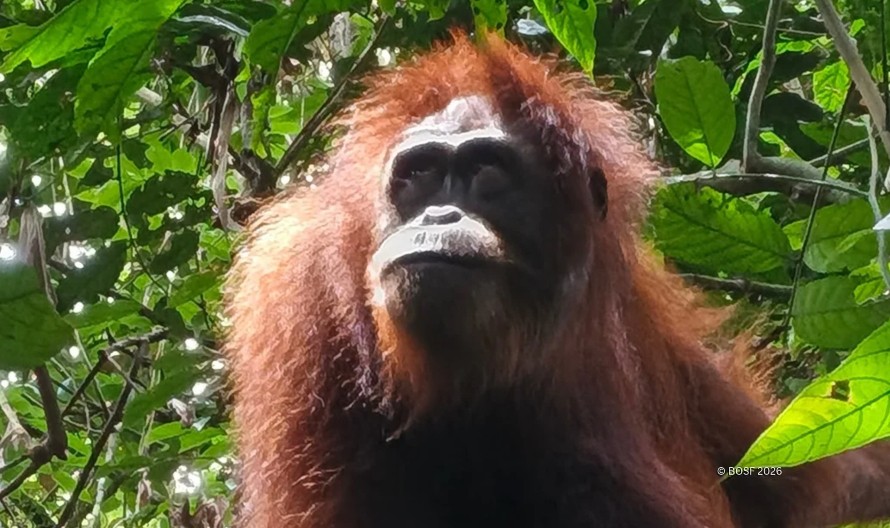
Post-release monitoring allows us to observe orangutans in the wild. Recent sightings of Meryl and Lykke in TNBBBR show both female orangutans actively foraging and displaying excellent nest-building skills.
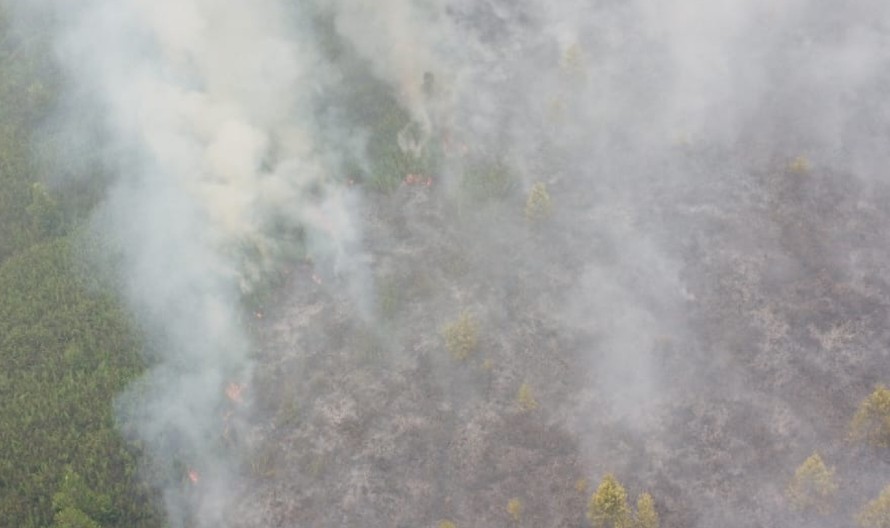
Forest fires create a hidden crisis for wildlife. Beyond destroying habitats, smoke exposure threatens orangutans' health, restricts food and water, and violates core animal welfare principles across Kalimantan's ecosystems.
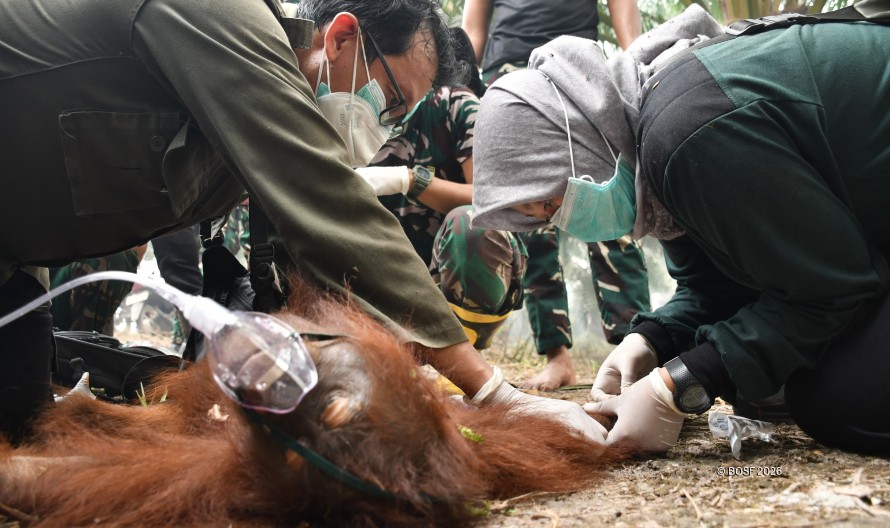
When forest fires strike, orangutans face a deadly fight for survival. Trapped atop a burning tree in Central Kalimantan, baby orangutan Novita was rescued through a joint emergency effort by BKSDA, BOS Foundation, TNI AD, and local residents.
