


ENCOUNTER WITH ORANGUTANS MERYL AND LYKKE
Post-release monitoring allows us to observe orangutans in the wild. Recent sightings of Meryl and Lykke in TNBBBR show both female orangutans actively foraging and displaying excellent nest-building skills.



One way to monitor and protect wildlife populations in their habitats is by collecting relevant data through observations and censuses. The BOS Foundation participates in an annual data collection activity that focused on waterbirds and wetlands. The following is the result of our recent observations conducted in the Salat Island Cluster, Central Kalimantan.
Just like our team on Juq Kehje Swen Island in East Kalimantan, our team of technicians in the Salat Island Cluster in Central Kalimantan, also participated in this year’s Asian Waterbird Census (AWC). The AWC is a network-based volunteer activity and part of the International Waterbird Census (IWC). In Indonesia, the AWC has been carried out since 1986 under the coordination of the Ministry of Environment and Forestry (KLHK) and Wetlands International, with support from the National Geographic Society and the Kemitraan Nasional Konservasi Burung Bermigrasi dan Habitatnya (National Partnership for the Conservation of Migratory Birds and Their Habitat).
The Salat Island Cluster is an area covering more than 3,000 hectares in Pulang Pisau Regency, Central Kalimantan. Part of this area is being used for a pre-release island, a sanctuary island, and a supporting infrastructure island. The cluster is located within the Kahayan River system, which has abundant food sources and the potential to be an ideal resting and breeding ground for water and wetland birds.
Our team of technicians on Salat Island conducted observations and collected data on water and wetland birds for a week in early February. They found quite a number of bird species at four different observation points, but only two waterbird species were observed, the white-breasted waterhen (Amaurornis phoenicurus) and the striated heron (Butorides striata).

The white-breasted waterhen is found in various parts of Southeast Asia, including India, the Philippines, and a number of islands throughout Indonesia. This bird favors swamp grass, rice fields, mangroves, roadside ditches, and various other wetlands.
The white-breasted waterhen used to be easy to find, but its numbers have decreased considerably as a result of hunting and fishing. These waterhens are also disappearing from rice fields due to chemical pesticide use, which has polluted the soil and made it difficult for the species to forage for grains, worms, insects, and small snails.
The striated heron is commonly found on beaches, riverbanks, and lakes. This fish-eating bird is widespread throughout the tropical regions of the world and is an aloof species that stalk prey by hiding in dense reed clumps, bushes, and mangroves. During low tide, the striated heron can sometimes be seen on open rocks and coral reefs, where it preys on fish, shrimp, insects, frogs, and small snakes.
Striated herons can nest alone or in small colonies. They build nests in the trees using piles of twigs and usually breed during the varying rainy seasons across their tropical range.
Both the white-breasted waterhen and the striated heron are unprotected species by national conservation standards, with the IUCN categorizing them under the 'Least Concerned' status.
Hopefully, in next year’s AWC, our team working on the Salat Cluster Island will discover even more water and wetland bird species.


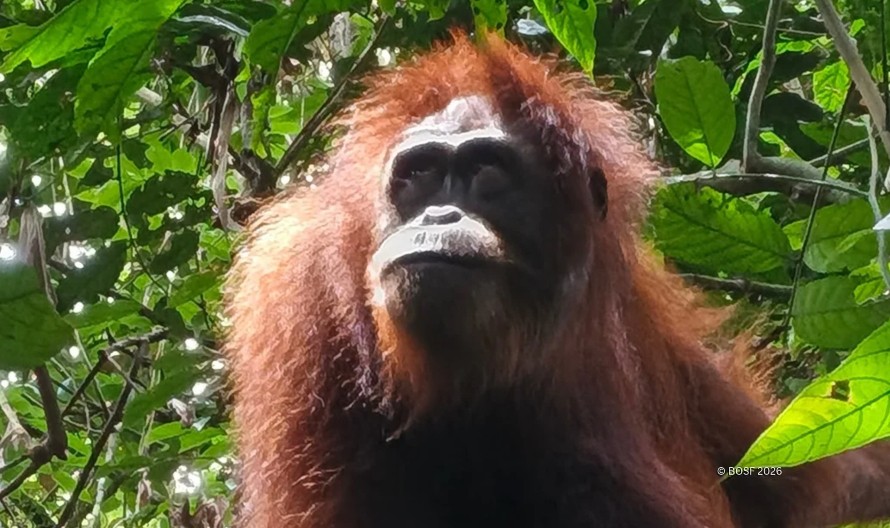
Post-release monitoring allows us to observe orangutans in the wild. Recent sightings of Meryl and Lykke in TNBBBR show both female orangutans actively foraging and displaying excellent nest-building skills.
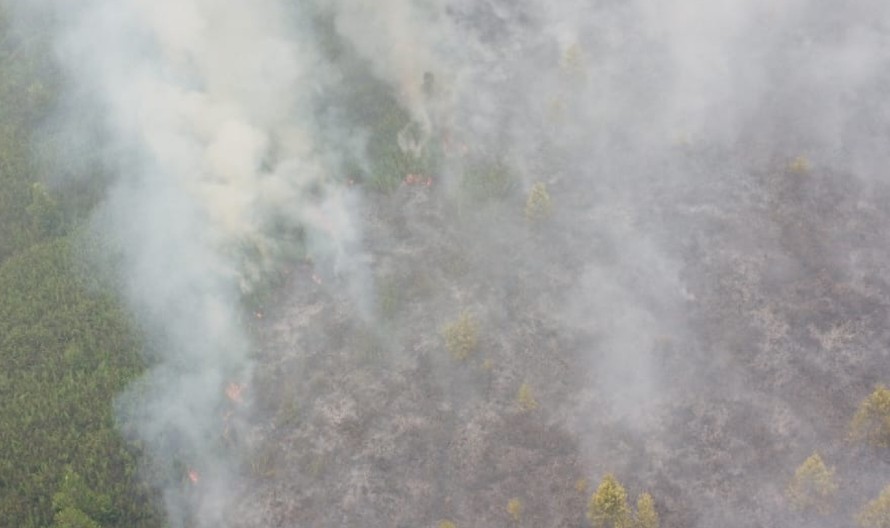
Forest fires create a hidden crisis for wildlife. Beyond destroying habitats, smoke exposure threatens orangutans' health, restricts food and water, and violates core animal welfare principles across Kalimantan's ecosystems.
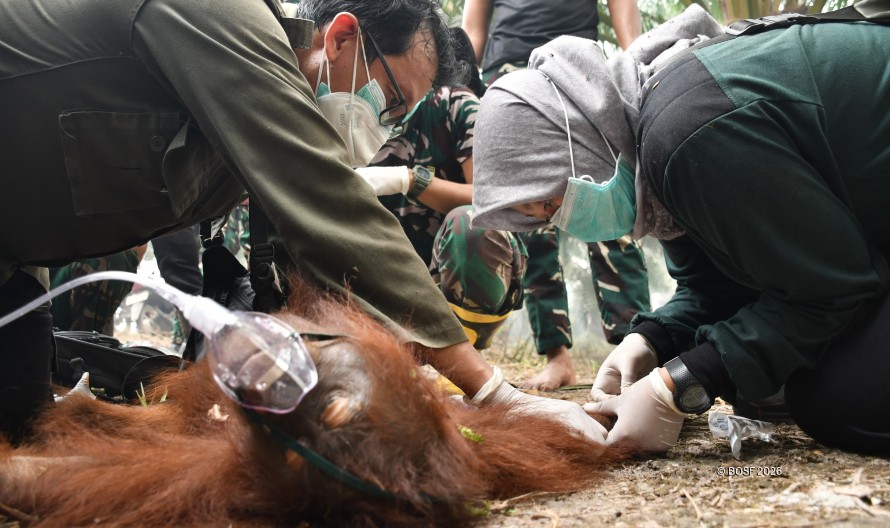
When forest fires strike, orangutans face a deadly fight for survival. Trapped atop a burning tree in Central Kalimantan, baby orangutan Novita was rescued through a joint emergency effort by BKSDA, BOS Foundation, TNI AD, and local residents.
