


ENCOUNTER WITH ORANGUTANS MERYL AND LYKKE
Post-release monitoring allows us to observe orangutans in the wild. Recent sightings of Meryl and Lykke in TNBBBR show both female orangutans actively foraging and displaying excellent nest-building skills.


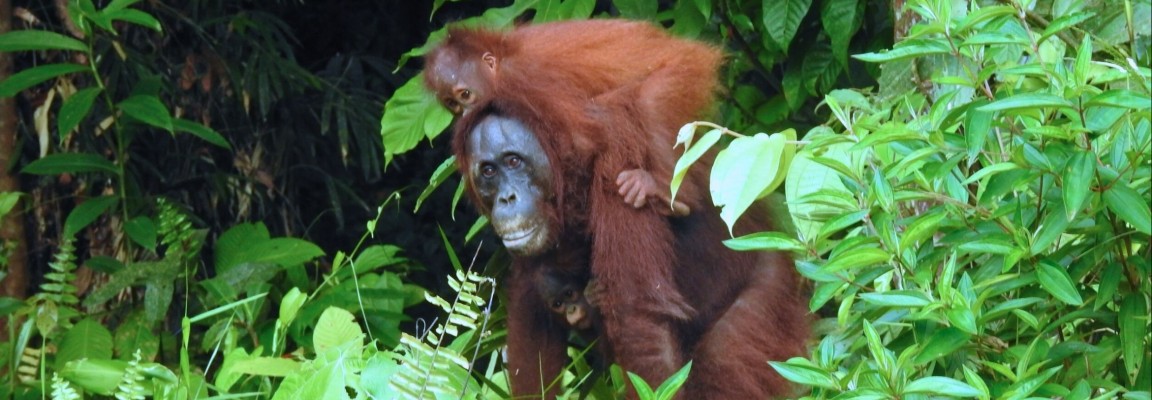
Every year on November 5, Indonesia celebrates Hari Cinta Puspa dan Satwa Nasional (HCPSN) or National Flora and Fauna Love Day. This day is more than a commemoration. It is a reminder of our shared responsibility to safeguard Indonesia’s rich biodiversity. In line with this spirit, the story of Inung, a rehabilitated orangutan thriving in the Bukit Batikap Protected Forest, offers an inspiring example of conservation success.
Inung was first released into the wild in 2013, at the age of 15, alongside her two young daughters, Indah and Ina. Since her release, Inung has adapted remarkably well to life in the forest. Over the years, she has successfully raised and given birth to four infants in Batikap, a testament to her resilience and the effectiveness of the rehabilitation program.
Read also: INUNG SURPRISES PRM TEAM WITH BABY!
By 2025, Inung’s story reached a new milestone. She is now often seen accompanied by her two youngest children, Indie and Indro, who faithfully follow her explorations through the forest. Their daily lives continue to overlap with Totat Jalu Monitoring Camp, where researchers and monitoring teams carry out their conservation work.
Scientific studies have highlighted that orangutans’ ability to adapt post-release is strongly influenced by their life history and learning experiences. Inung’s successful reintroduction into the wild illustrates how structured rehabilitation can prepare orangutans for survival in their natural habitat.
In 2025, the Post-Release Monitoring (PRM) Team observed Inung three times in March, May, and July.
According to research on orangutan rehabilitation, the development of foraging and nest-building skills in young orangutans is a critical step toward successful independence in the wild.
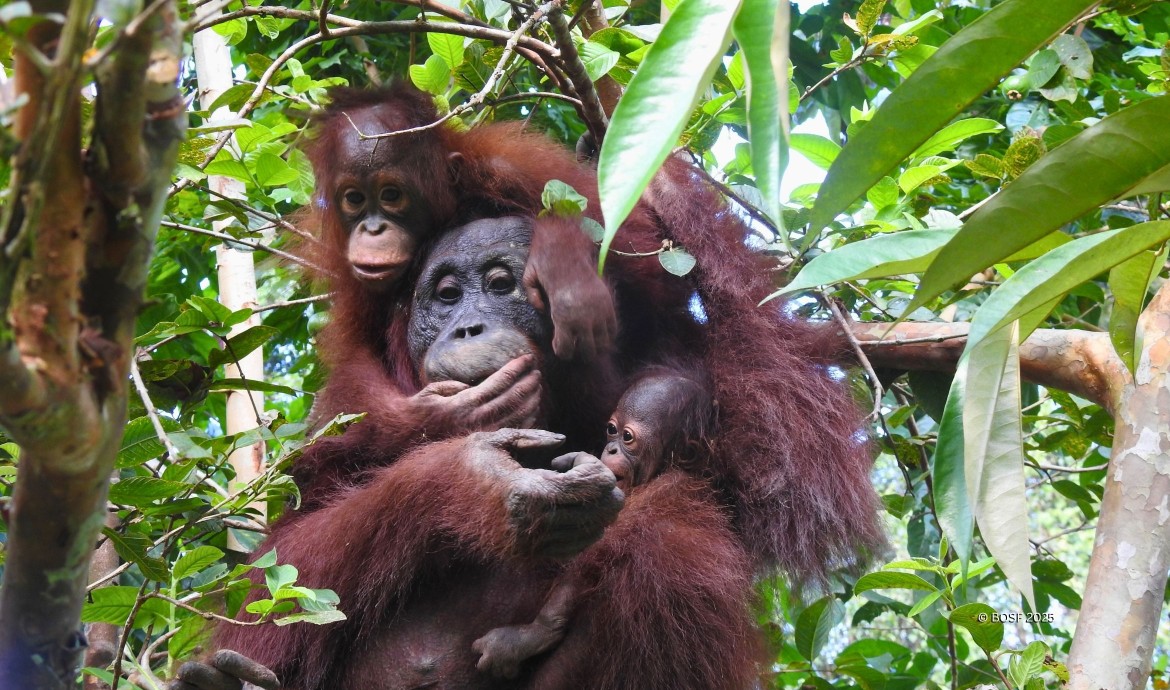
Inung, Indie, & Indro

Indie
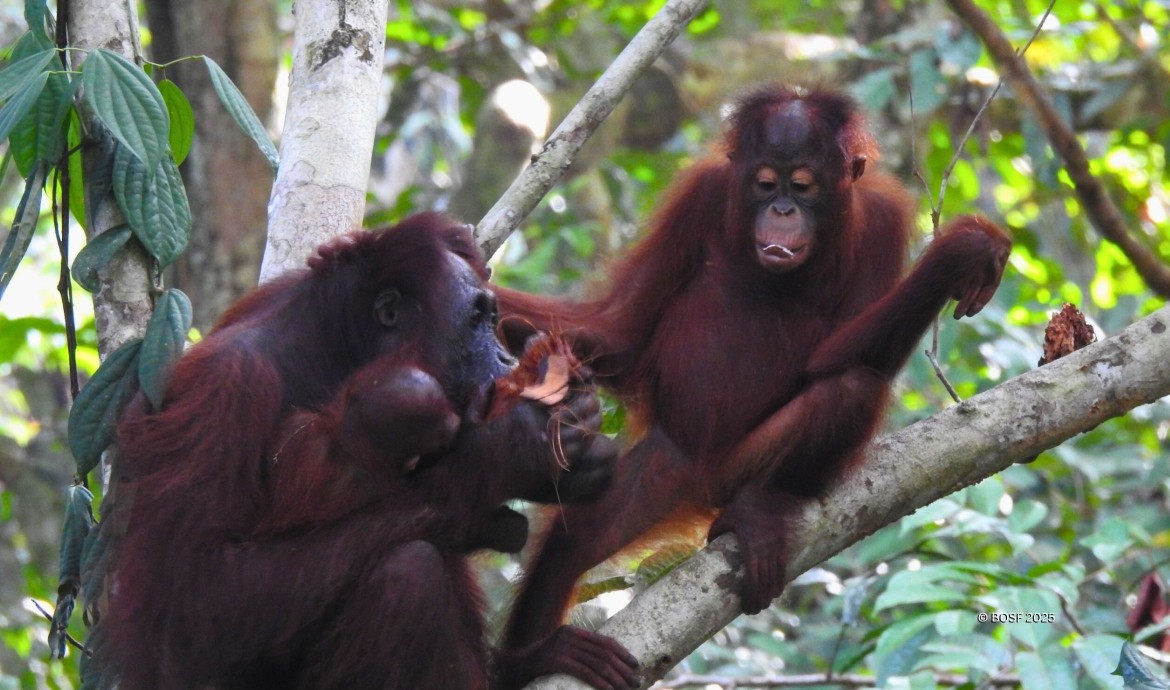
Indie and her cubs enjoy a meal time
Inung’s story is not just about her survival. It represents the broader success of orangutan reintroduction programs. Orangutan conservationists stress that long-term survival in the wild is the true measure of success, not simply the act of release.
Read also: UNEXPECTED ORANGE VISITORS
The fact that Inung has raised four offspring in the wild proves that reintroduced orangutans can establish sustainable generations. Indie’s growing independence and Indro’s ongoing learning under their mother’s care further emphasize the long-term impact of successful rehabilitation.
Their resilience and adaptability are key traits that determine whether rehabilitated orangutans thrive after release. Inung embodies both, passing down survival skills to her young.
Inung’s journey is perfectly aligned with the spirit of HCPSN 2025. This celebration is more than a symbolic reminder. It is a call to action to protect Indonesia’s flora and fauna, including orangutans, which are currently classified as Critically Endangered by the International Union for Conservation of Nature (IUCN).
Read also: A NEW LIFE IN THE BATIKAP FOREST
From Inung, we learn that every act of rehabilitation, conservation, and habitat protection can yield real results. When provided with a safe space, orangutans can not only survive but also continue their lineage in the wild. This is living proof that when love for flora and fauna becomes part of our way of life, conservation success becomes possible.
References:


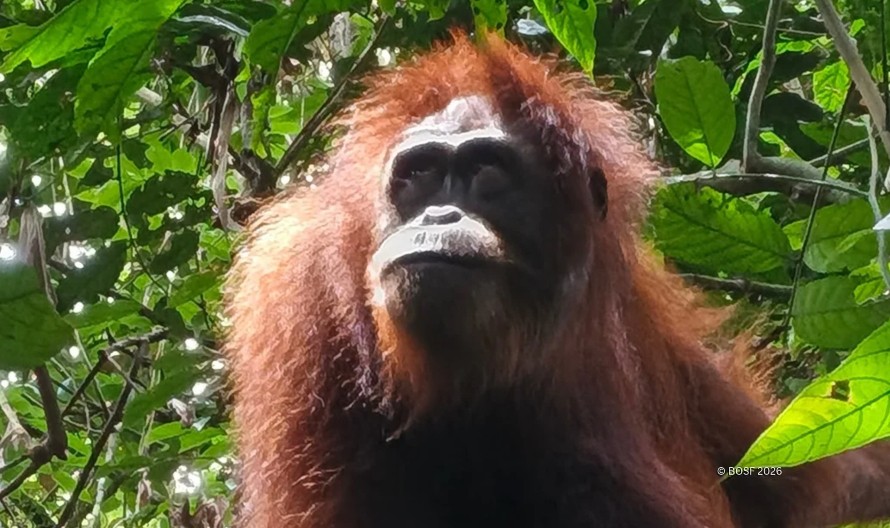
Post-release monitoring allows us to observe orangutans in the wild. Recent sightings of Meryl and Lykke in TNBBBR show both female orangutans actively foraging and displaying excellent nest-building skills.
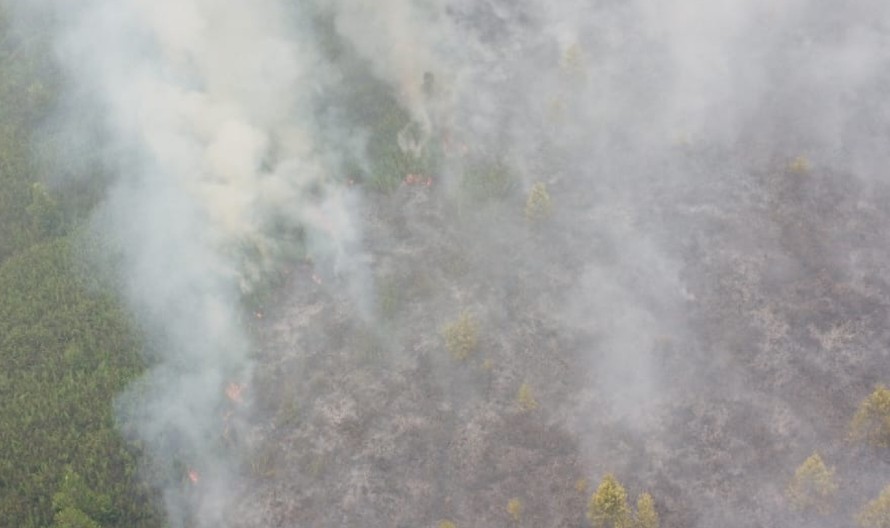
Forest fires create a hidden crisis for wildlife. Beyond destroying habitats, smoke exposure threatens orangutans' health, restricts food and water, and violates core animal welfare principles across Kalimantan's ecosystems.
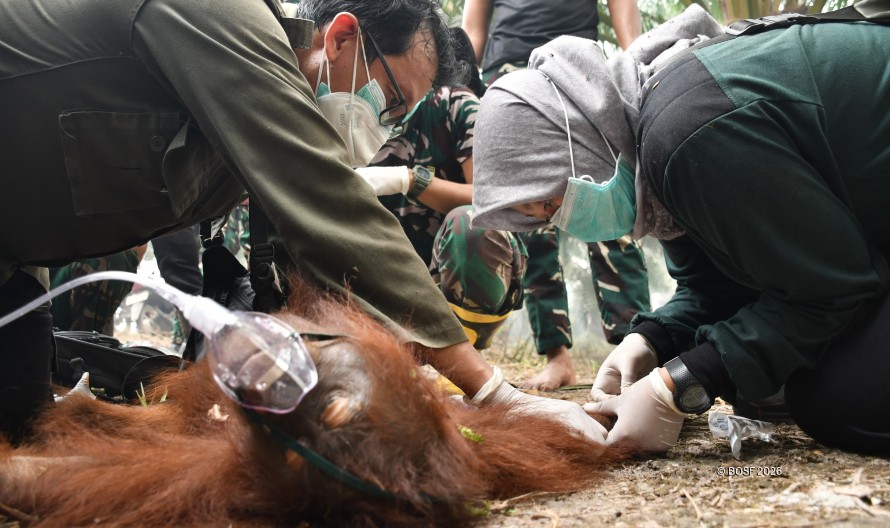
When forest fires strike, orangutans face a deadly fight for survival. Trapped atop a burning tree in Central Kalimantan, baby orangutan Novita was rescued through a joint emergency effort by BKSDA, BOS Foundation, TNI AD, and local residents.
