


ENCOUNTER WITH ORANGUTANS MERYL AND LYKKE
Post-release monitoring allows us to observe orangutans in the wild. Recent sightings of Meryl and Lykke in TNBBBR show both female orangutans actively foraging and displaying excellent nest-building skills.


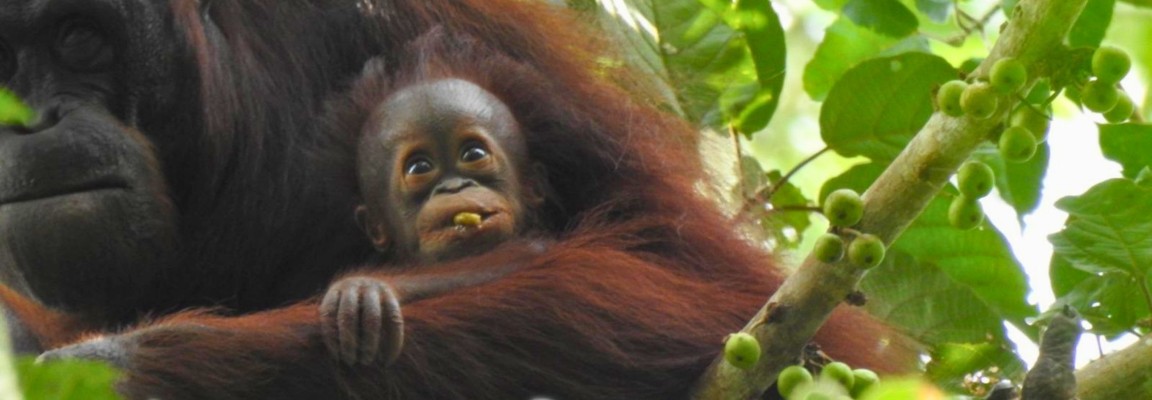
Last January, our Post-Release Monitoring (PRM) team completed a series of radio-tracking activities to locate orangutan movements across several main transects in the Bukit Batikap Protected Forest. After finishing the day’s work, the team began their journey back to camp by motorized boat. However, the day was not quite over. Together, the team made a spontaneous decision, to continue traveling downstream along the Joloi River in search of Mardianto, an orangutan that had been detected the day before but later lost from radio contact.
What started as an additional search trip soon turned into an unexpected encounter. Along the banks of the Joloi River, near one of the access paths leading to a patrol transect, our team spotted a female orangutan carrying her infant.
The baby appeared very young and remained closely attached to its mother. Based on body size and interaction patterns, the infant was estimated to be around one year old, or possibly even younger. After careful identification based on facial features and body characteristics, the mother was confirmed to be Sisi. To make referencing the infant easier during monitoring, the team gave the young orangutan the name Sijalu.
Observations began that afternoon at 13:10 PM local time and continued until the mother and infant built their night nest. Throughout the observation period, Sisi’s activities were dominated by feeding on sangkuang fruit high in the forest canopy. Meanwhile, Sijalu spent most of the time nursing and remaining securely in the arms of its mother.
Their night nest was built only about 10 meters from the riverbank. Previous observations of ex-rehabilitated orangutans have shown that they often prefer riparian areas. These habitats tend to provide abundant food resources due to their proximity to water sources.
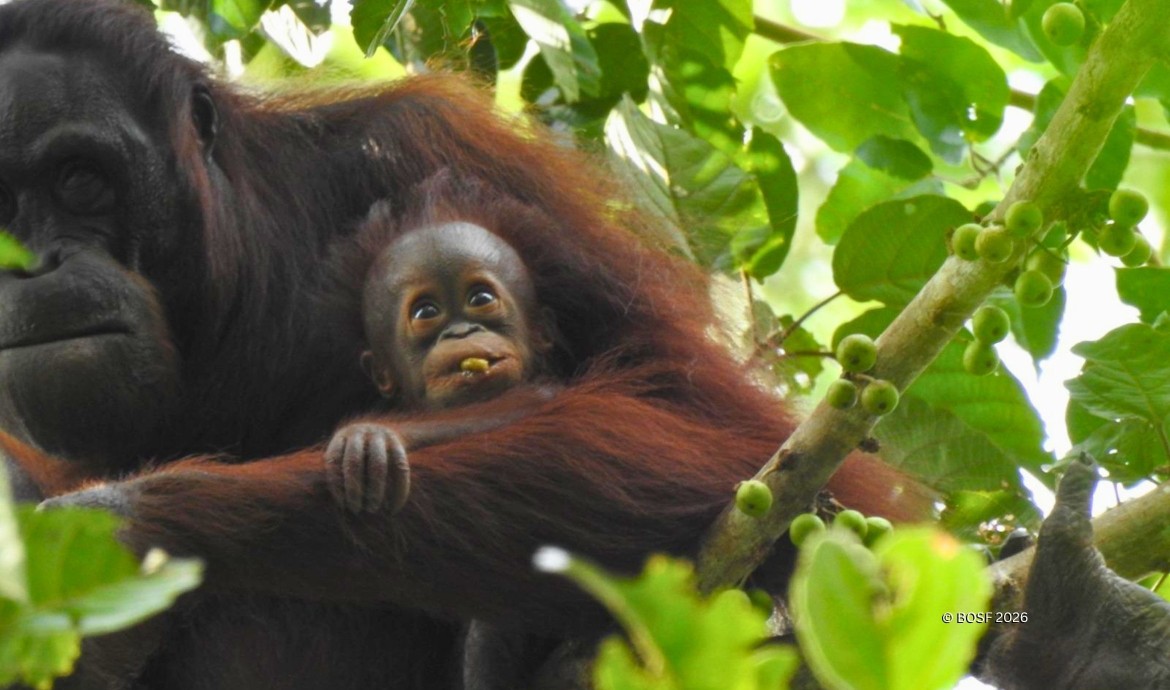
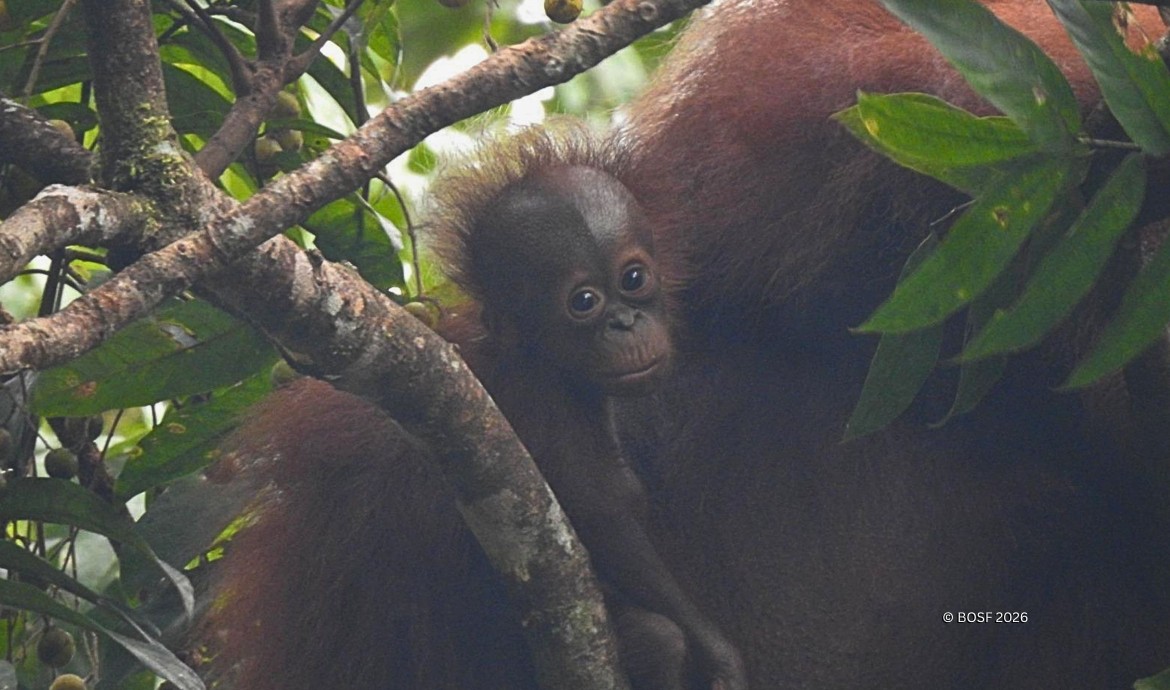
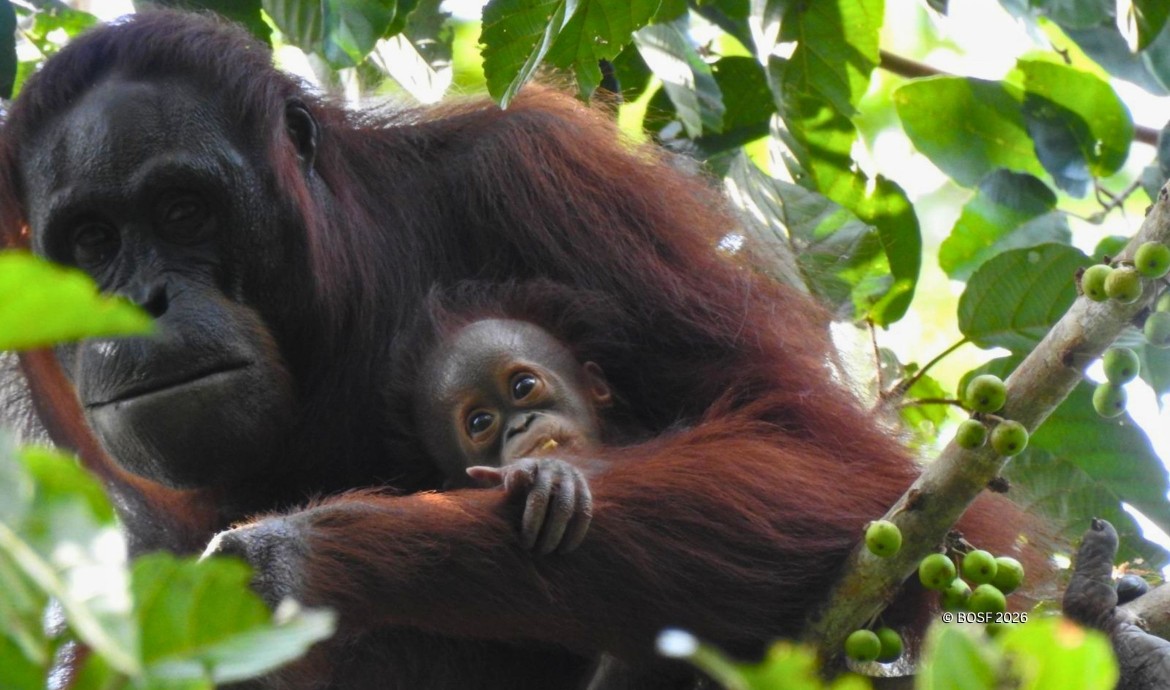
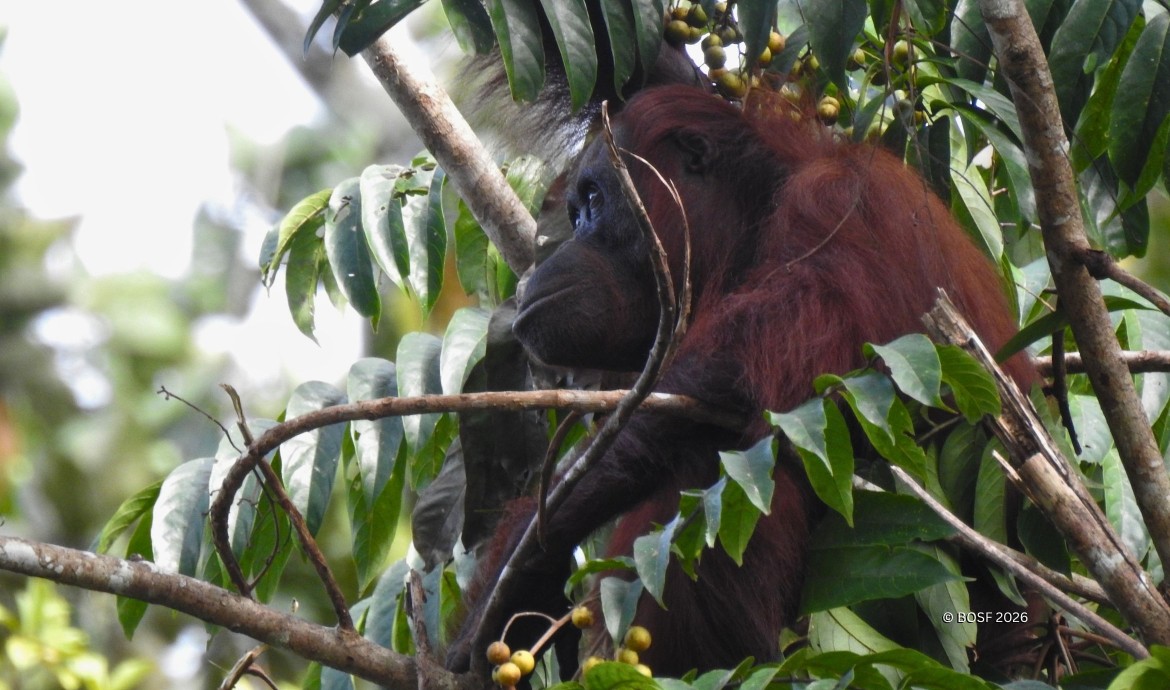
The following day, monitoring resumed using the nest-to-nest method starting at 05:10 AM local time and continuing throughout the day. After leaving her nest, Sisi once again spent much of her time feeding. This time, her diet included a wider variety of natural foods such as sangkuang fruit, ara, liana leaves, mahawai, meranti, pilang bark, and young bamboo shoots.
Her activities remained mostly in the forest canopy, reflecting both good physical condition and strong arboreal mobility. Sijalu continued to display the same behaviours—nursing, being carried by its mother, and only occasionally making small independent movements.
A slight behavioural change became visible on the following day. In addition to nursing, Sijalu began imitating its mother by trying several natural foods such as saluoi fruit, sangkuang fruit, and lisum. Although the young orangutan still frequently returned to Sisi’s embrace, these small moments marked the beginning of an important stage: learning to recognize and consume natural foods in the wild.
Throughout the three days of observation, both individuals appeared active, healthy, and showed no signs of physical disturbance. Their final night nest was built in a bajun tree at a height of more than 20 meters, such an ideal position that provides protection from potential predators.
The story of Sisi and Sijalu is more than just a monitoring record. It offers a real glimpse into how a mother orangutan raises her infant in the wild. These observations also reinforce the importance of the Joloi River riparian area as critical habitat for orangutans, particularly for mothers with very young offspring like Sisi and Sijalu. The availability of food, safety, and supportive forest structure make this area an ideal living space for sustaining and supporting new pockets of orangutan populations.
What began as a search for a single individual ultimately revealed something far more meaningful: a snapshot of maternal care, the early learning process of a young orangutan, and a reminder of why protecting forests remains essential for their survival.


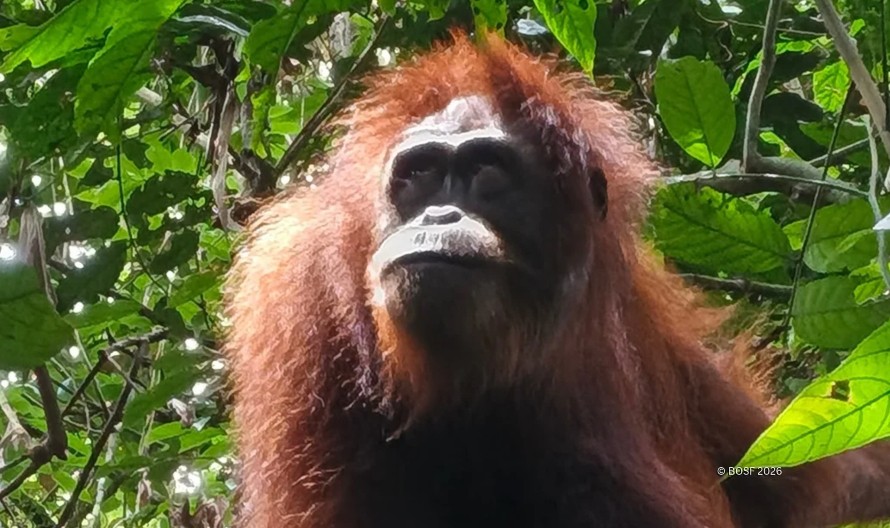
Post-release monitoring allows us to observe orangutans in the wild. Recent sightings of Meryl and Lykke in TNBBBR show both female orangutans actively foraging and displaying excellent nest-building skills.
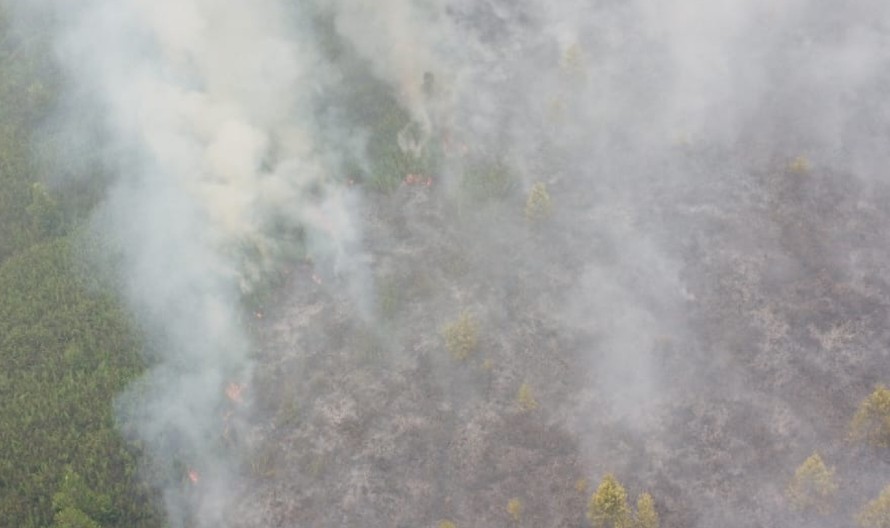
Forest fires create a hidden crisis for wildlife. Beyond destroying habitats, smoke exposure threatens orangutans' health, restricts food and water, and violates core animal welfare principles across Kalimantan's ecosystems.
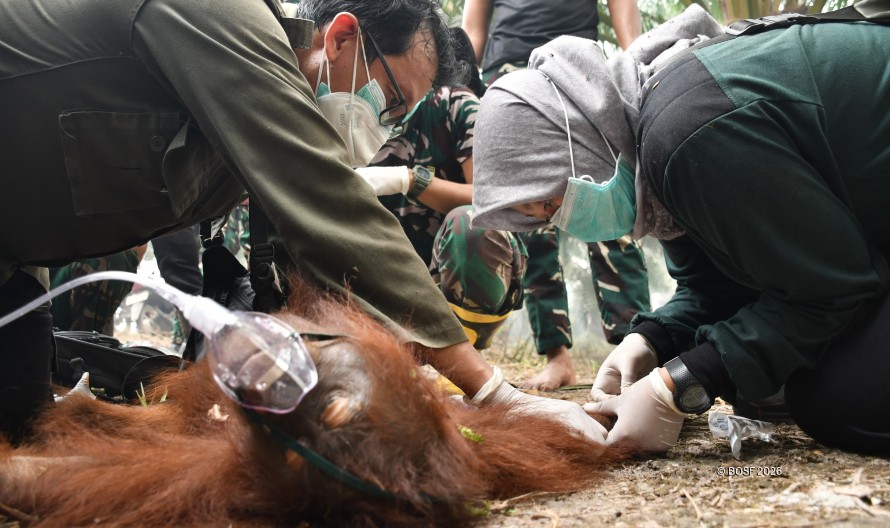
When forest fires strike, orangutans face a deadly fight for survival. Trapped atop a burning tree in Central Kalimantan, baby orangutan Novita was rescued through a joint emergency effort by BKSDA, BOS Foundation, TNI AD, and local residents.
