On May 21, 2013, a collaborative team from the BOS Foundation and Restorasi Habitat Orangutan Indonesia (RHOI) successfully completed a rescue and release operation in an oil palm plantation belonging to PT. Yudha Wahana Abadi (YWA). During that operation and also supported by additional staff from PT. YWA, our team rescued one male orangutan who was named Marjo, and released him into Kehje Sewen, a forest managed by PT. RHOI specifically for our East Kalimantan orangutan reintroduction program.
Between December 4-14, the BOS Foundation and RHOI together with PT. YWA, undertook another rescue and release operation in the same plantation in Berau, East Kalimantan. The team consisted of Eko Prasetyo (Rescue and Release Project Leader), Vet Agus Irwanto (Head Veterinarian and Program Manager of Samboja Lestari), Jubir and Arif (Technicians from Samboja Lestari), Imam (Driver), Tatang (RHOI Community Development Coordinator), and Aswar (PT. YWA Healthy and Safety Environment Division)
Combing the Forest
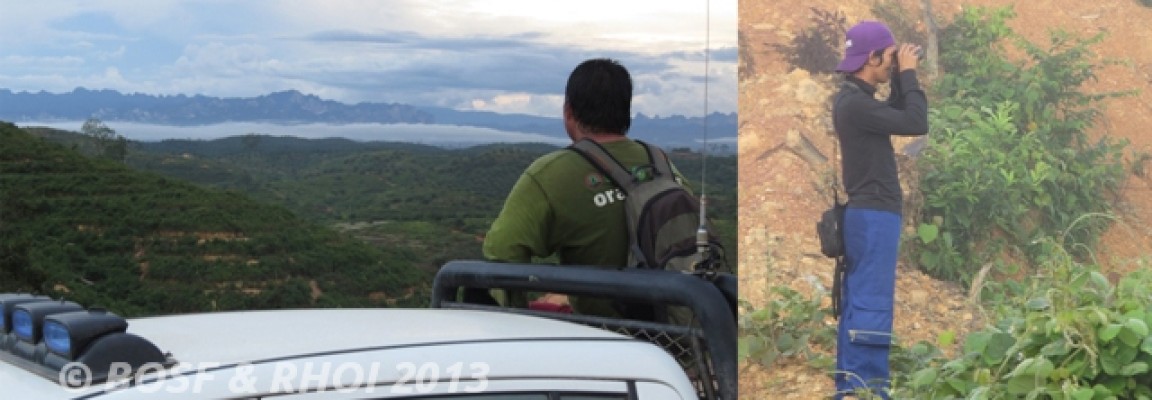
The Team started combing the forest searching for orangutan presence on December 5 in blocks of the plantation which had previously been surveyed.
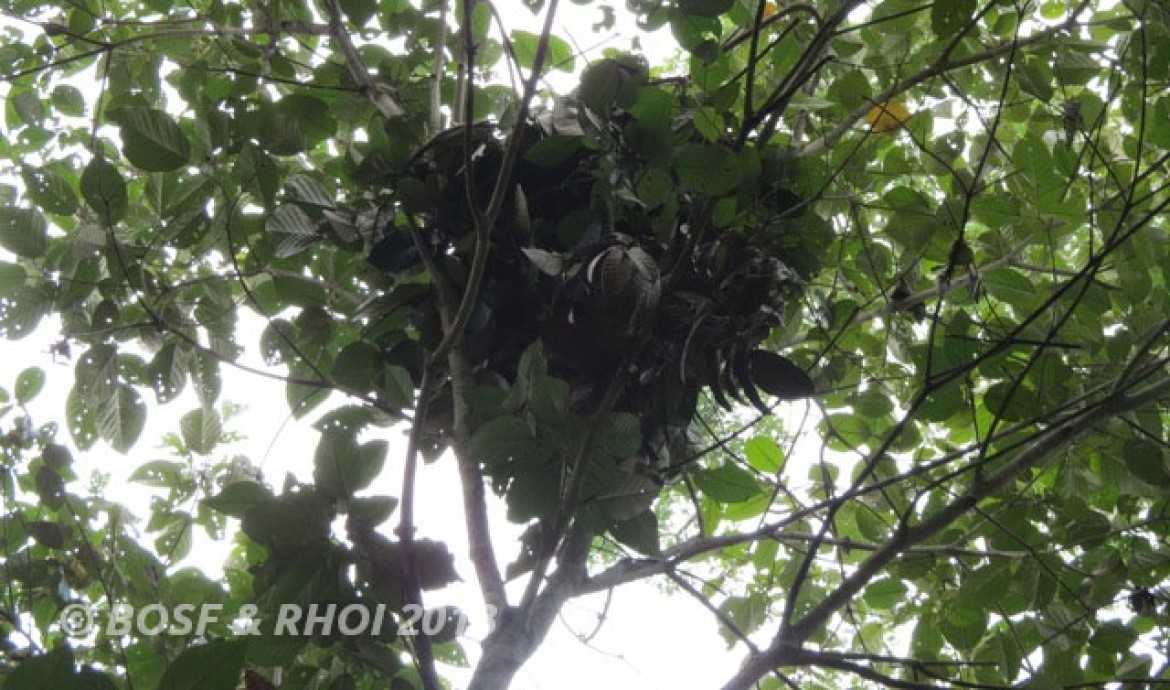
In Block G, the Team found fresh orangutan nests, but they didn’t find orangutans. However, they spotted orangutans in Blocks K, M, E, and C. On December 6, the Team found two female orangutans in Block K. The next day, they found an orangutan, but didn’t manage to identify whether it was a male or female. On the same day, an adult male long-call was heard in Block E, and on the fifth day, December 9, another female orangutan was spotted in Block C. Unfortunately, the team couldn’t rescue them.
Rescuing Muslimah
After trekking through the forest for five days, finally on the sixth day, December 10 at 3 pm, the team found a female orangutan in Block K.
This female orangutan was sitting on a tree in a small valley. The location was covered by a bushy understory, but there were only two tall trees left.
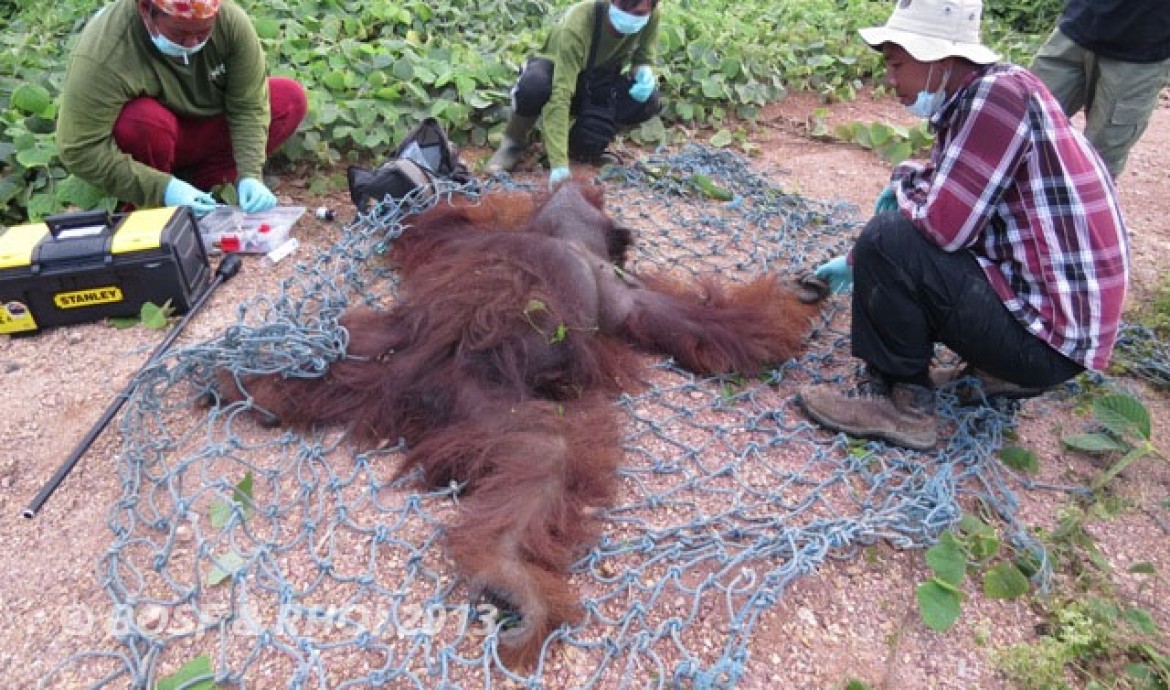
Annoyed by the presence of humans, she kiss-squeaked and threw branches at the Team. She looked nervously at the tranquiliser gun in Vet Agus’ hands, even though it was not being pointed at her. Since she had nowhere to run, Jubir who was holding a blow pipe was easily able to sedate the female and the Team was ready to catch her with a safety net, which they did perfectly.
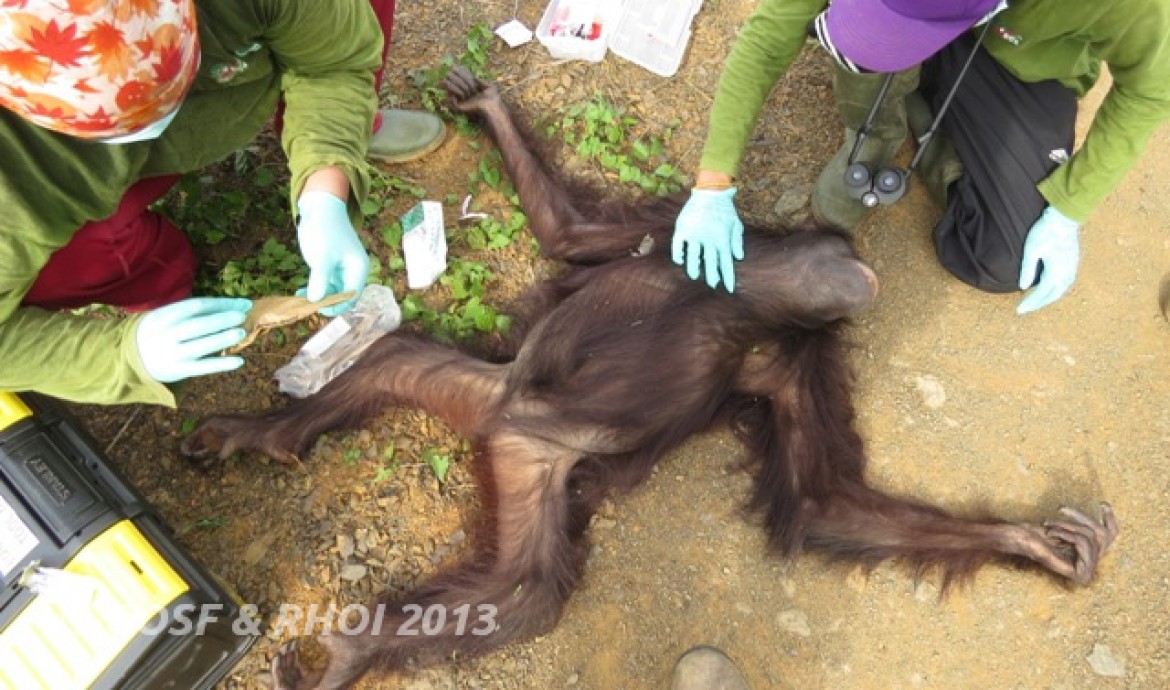
Vet Agus Irwanto immediately conducted the initial medical assesment. She was very young, around 11 or 12 years old and weighed 30 kgs. Vet Agus took a blood sample and implanted an identification chip.
She was healthy, but underweight. Sadly, three rifle pellets were found embedded in her body. Two were on her crotch area and one in her thigh. Obviously she had previously experienced a traumatic incidence with weapons hence her nervous reaction upon seeing the tranquiliser gun.
Vet Agus decided to perform the short surgery needed to remove the pellets to avoid later possibilities of infection and to make sure of her wellbeing when she was released into Kehje Sewen.
The Team called her Muslimah, after a baby girl of an employee of PT. YWA who lives in the camp nearby the location where the orangutan was found.
Meeting Big Guy Aswar
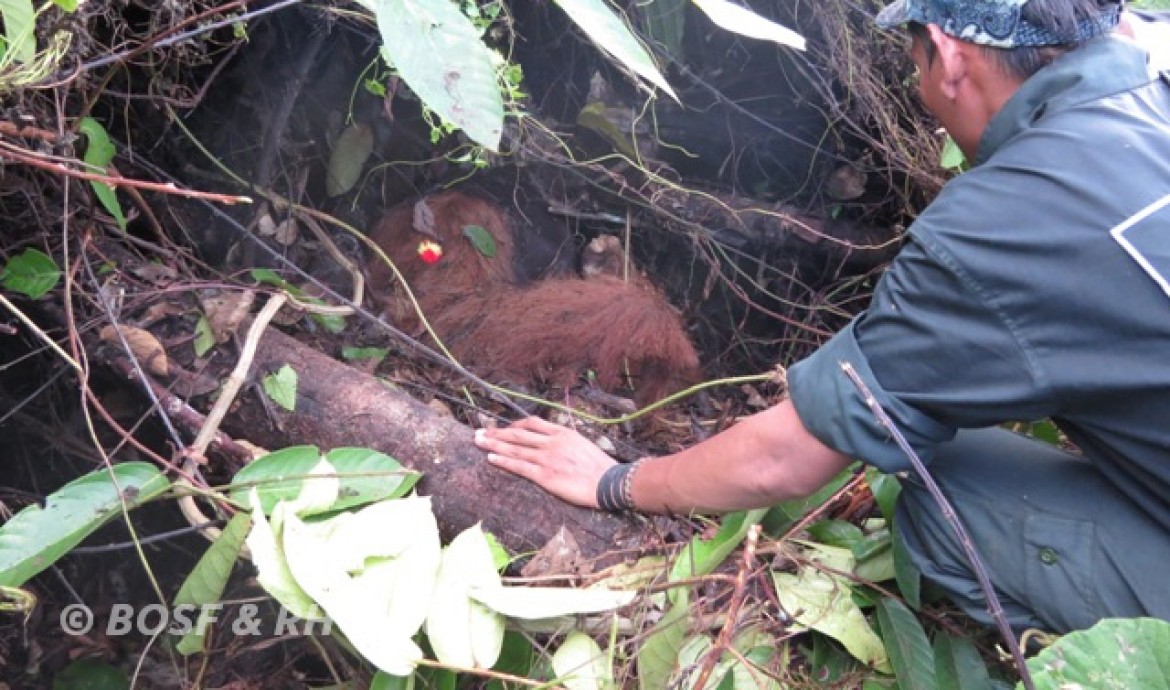
Two hours later, as dusk approached, the Team found another orangutan at the same location. He was an adult male with large cheekpads. According to Agus, based on the orthodentic information, the orangutan was around 28-30 years old. He weighed a healthy 90 kgs.
Before, this male orangutan with thick and long hair was located in a tree. Seemingly he had just finished eating palm shoots since there were the remains of fresh shoots scattered around the tree. He moved down to the valley, which is when the Team managed to catch up with him. Since he was already on the ground, he couldn’t move away from the Team and in fear he swung his hands towards the team. The team calmly sedated the large male with two tranquilisers darts.
The team named this beautiful male Aswar, after the Healthy and Safety Environment officer of PT. YWA. Vet Agus checked his condition, took a blood sample and implanted an indentification chip. Aswar was healthy and ready to be released into Kehje Sewen.
Ready to Move to New Home
The Rescue and Release Team left PT. YWA towards the Kehje Sewen Forest on December 13 at 6 in the morning. On the journey to their new home, Vet Agus constantly checked the condition of Muslimah and Aswar.
From her skinny build, Muslimah looked to be undernourished. When the Team gave her fruit, she devoured everything, looking so heartbreakingly hungry. While Aswar only chose pineapple and rambutan as his food.
Aswar and Muslimah Translocated to Kehje Sewen (Photo credit: BOSF-RHOI 2013)
Aswar and Muslimah Translocated to Kehje Sewen (Photo credit: BOSF-RHOI 2013)
Aswar and Muslimah Translocated to Kehje Sewen (Photo credit: BOSF-RHOI 2013)
Aswar and Muslimah Translocated to Kehje Sewen (Photo credit: BOSF-RHOI 2013)
Aswar and Muslimah Translocated to Kehje Sewen (Photo credit: BOSF-RHOI 2013)
Aswar and Muslimah Translocated to Kehje Sewen (Photo credit: BOSF-RHOI 2013)
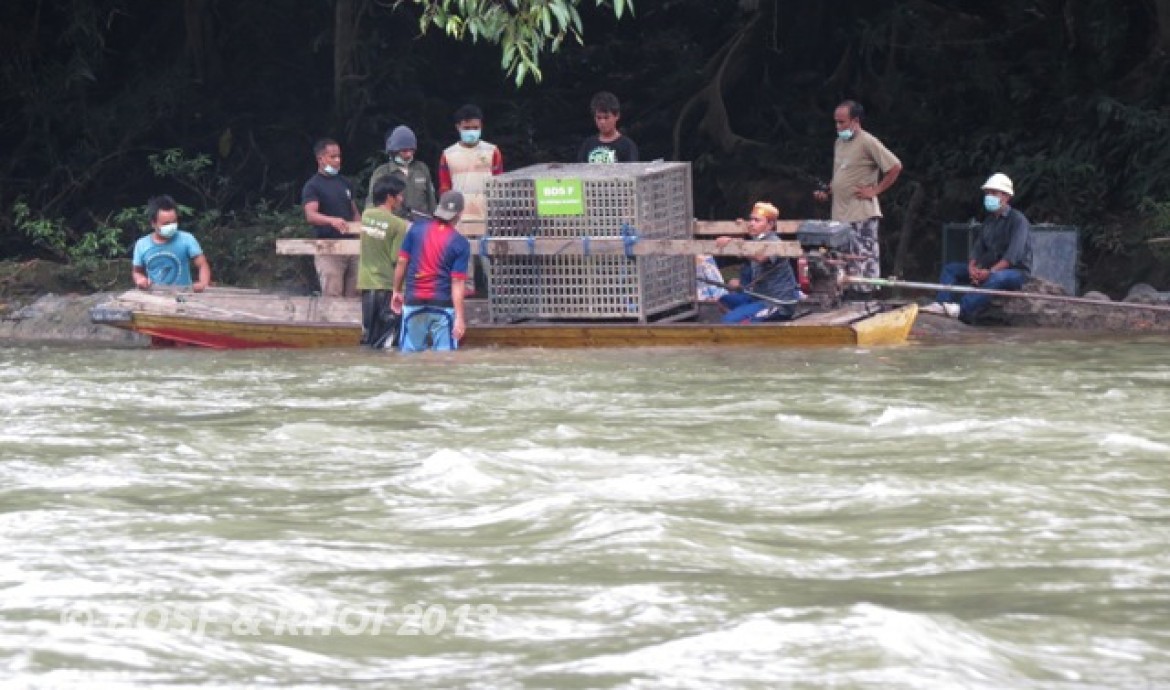
The plan was for them to be released into the Kehje Sewen area across the Telen River. To be able to release Muslimah and Aswar in a safe area, the Team had previously brought a ketinting (Dayak traditional boat) from Muara Wahau Regency, to cross the Telen River.
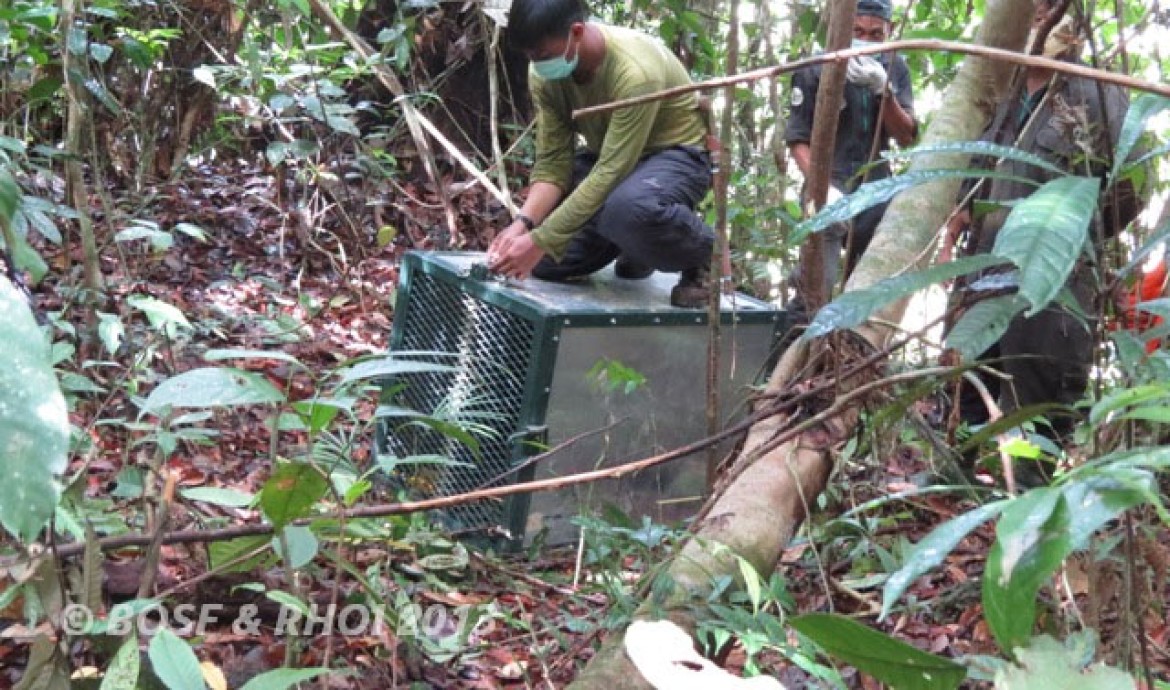
As soon as they arrived at the release point, Tyo, the Rescue and Release Project Leader, opened Muslimah’s travel cage at 13.15. Muslimah didn’t waste any time to climb the nearest tree. Vet Agus opened Aswar’s travel cage at 14.00. Released from the travel cage, Aswar spent some time inspecting the new environment on the ground before finally climbing a tree.
It is fruit season at the moment in Kehje Sewen and their release locations are abundant with Garcinea and forest rambutan, ensuring Muslimah and Aswar will not be lacking in sufficient food resources.
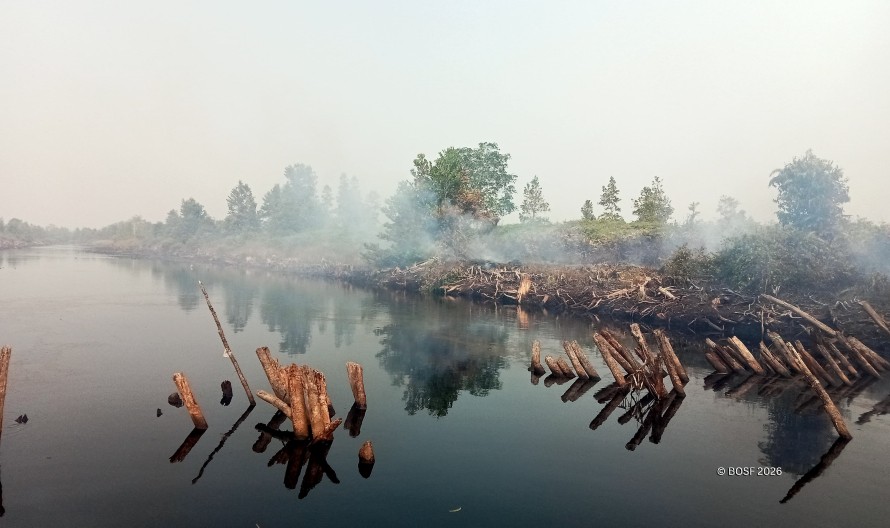
Finally Muslimah and Aswar now live in a safe and suitable home. There was no other choice in this particular case; they needed to be rescued and translocated to another forest since their old home is no longer sufficient or safe. Rescue and Release operations should be the last resort within orangutan conservation efforts. First and foremost, every company needs to provide suitable and safe habitat in their concession area to protect orangutans and other biodiversity. This is the form of responsibility from the private sector which is actively encouraged by the BOS Foundation.