COLLECTION OF RESCUE STORIES DURING FOREST AND LAND FIRES #1
When forest and land fires (karhutla) strike, orangutans face threats that are not always visible within the burned areas. Fire can destroy their habitat, while spreading smoke worsens air quality. Under certain conditions, orangutans may move closer to areas inhabited by humans and risk experiencing conflict.
Situations like these require a rapid response and close coordination between local communities, conservation officers, and rescue teams. Below are the rescue stories of three orangutans in Central Kalimantan that took place amid the threat of forest and land fires.
Rescuing Sri with the Help of a Thermal Drone
On October 14, 2026, local residents reported the presence of two orangutans near the Sekolah Rakyat construction site at Kilometer 39 on Jalan Cilik Riwut, Sei Gohong Village, Palangka Raya City. A joint team from the BOS Foundation and the Central Kalimantan BKSDA immediately departed for the location around 11:30 AM WIB.
Upon arriving at the site, the team faced several challenges. The two orangutans were reported to be inside a forest patch measuring approximately 6 to 8 hectares surrounded by buildings. Thick haze also limited visibility and made direct visual searches difficult.
To help locate the orangutans amid these conditions, the team deployed a thermal drone. This technology detects temperature differences in objects and helps the team identify points that require closer inspection. The aerial monitoring results then served as a guide for the ground team to pinpoint the orangutan's exact location.
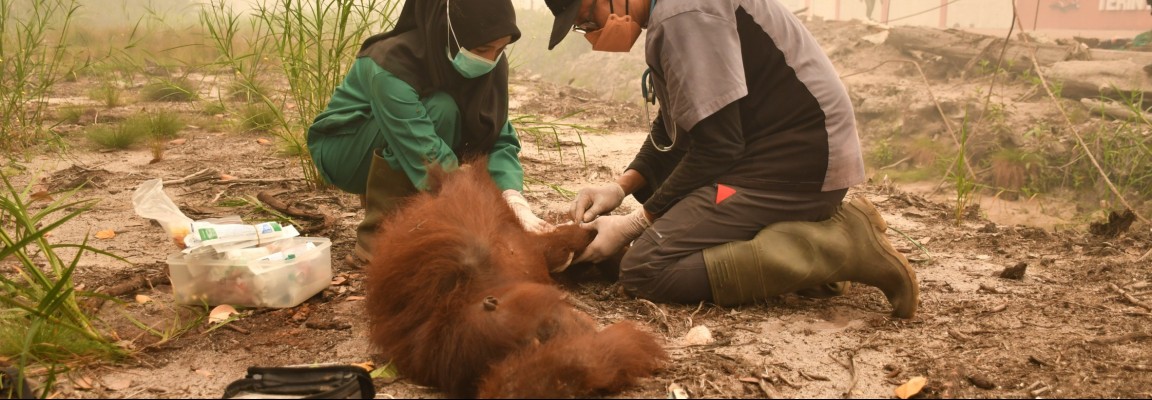
Veterinarian Agus Fahroni prepared the anesthetic, while technician Argono was tasked with sedating the animal using a tranquilizer gun. After the dart struck the orangutan's back, the team monitored its response to the sedative and prepared for evacuation. The orangutan was then safely secured using a rescue net.
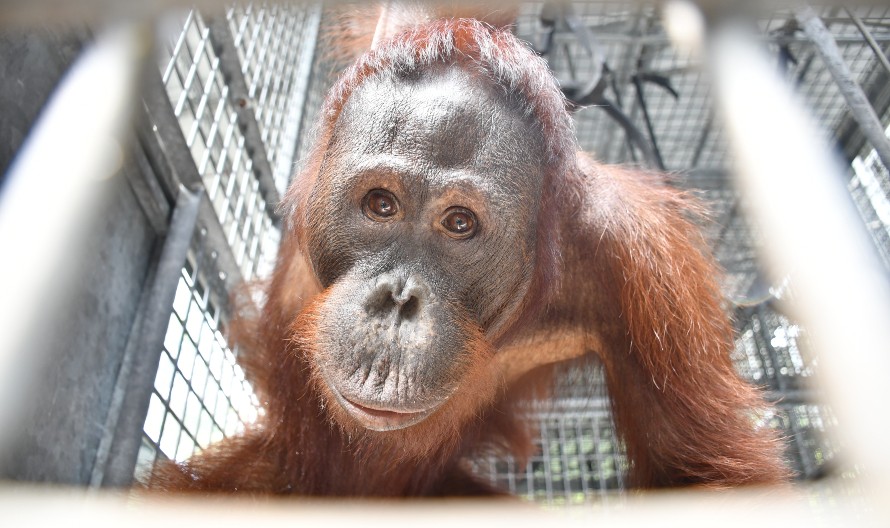
Initial medical examinations indicated that the female orangutan was estimated to be 9 to 10 years old and in relatively healthy physical condition. She was subsequently named Sri and evacuated to the Nyaru Menteng Complex to undergo further medical check-ups and monitoring by the animal care team.
The Challenge of Rescuing Hampangen
Three days later, on Saturday, October 17, 2026, at 8:30 AM WIB, the team received another report regarding an orangutan in a community-owned oil palm plantation in Hampangen Village, Katingan Regency. The BOS Foundation team alongside the Central Kalimantan BKSDA traveled to the site, while representatives from WWF Indonesia who had relayed the report stood ready to assist with monitoring.
Inter-agency collaboration played a vital role in the search process. With the assistance of a thermal drone owned by WWF Indonesia, the team successfully identified the location of the orangutan to be evacuated.
The individual was an adult male with prominent cheek pads, estimated to be over 20 years old. Sedation was carried out by officer Sugianto and succeeded on the second shot. Around 11:00 AM WIB, the orangutan was fully sedated, allowing the evacuation process to proceed.
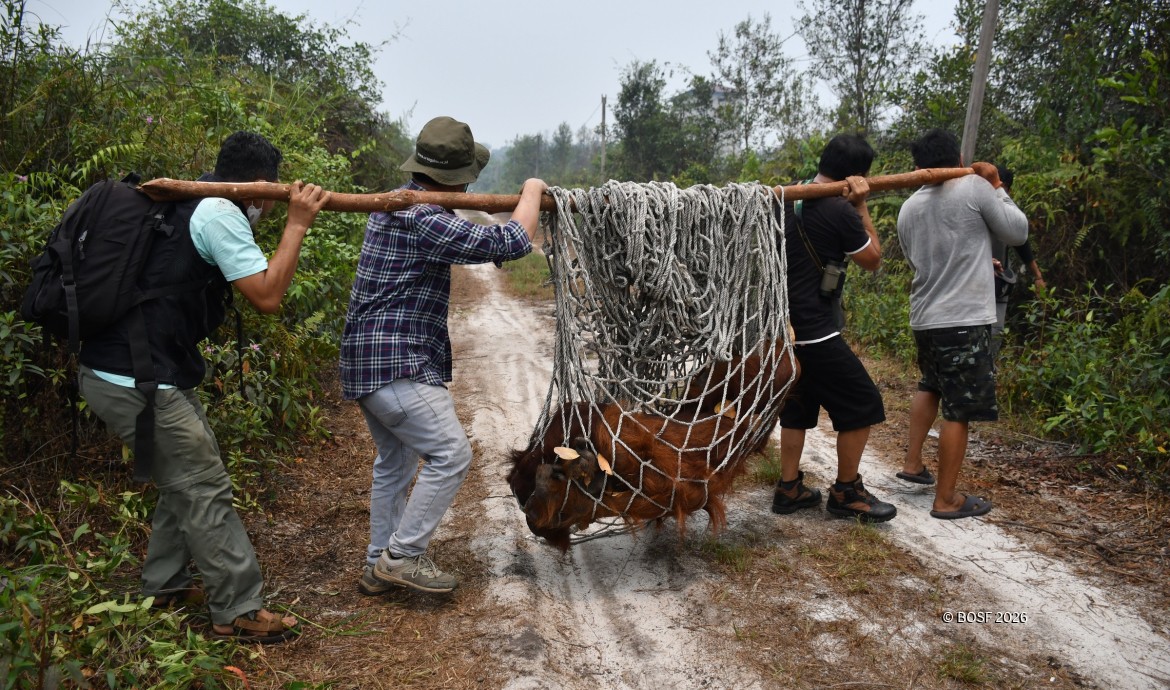
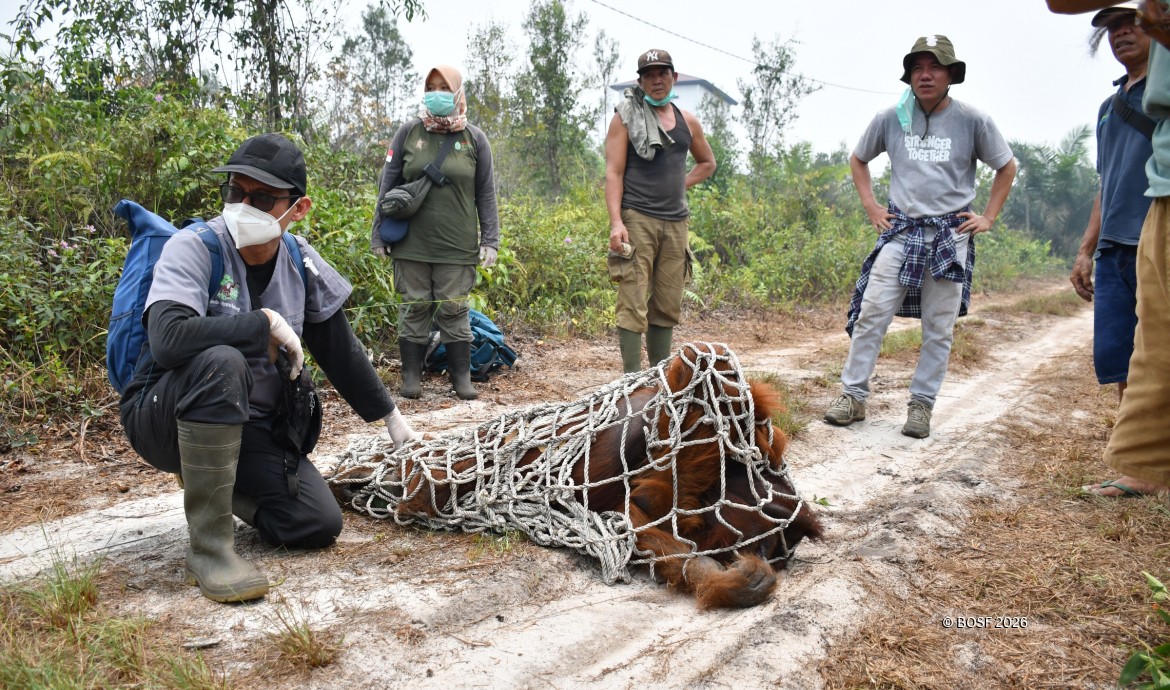
Carrying an adult male orangutan out from the middle of a plantation is no easy task. The team had to lift him manually using a net attached to thick wooden poles as a makeshift stretcher. In addition to requiring extra physical strength, this process demanded solid coordination to ensure the safety of both the orangutan and all team members.
Midway through the journey, the effects of the sedative began to wear off, and the orangutan showed signs of waking up and attempting to free himself from the net. Veterinarian Agus Fahroni promptly administered a supplementary dose of anesthetic so the evacuation could continue safely.
After being safely placed inside a transport cage, the orangutan was named Hampangen. Initial check-ups showed that his overall physical condition was relatively healthy, although the team discovered damage to nearly 50 percent of his teeth. This finding became a key point of attention for his subsequent medical examinations and health monitoring.
Rescuing Andy from a Fire-Affected Area
Still on the same day, October 17, 2026, another report was received from an oil palm plantation owner in the Katune area, Banturung Village, Bukit Batu District, Palangka Raya City. The report was forwarded through the Bukit Batu Sector Police to the Central Kalimantan BKSDA and the BOS Foundation around 2:11 PM WIB.
The plantation bordered directly on a forest area that was actively burning. The reported orangutan, found high up in an agarwood tree, appeared extremely weak. Given the surrounding conditions, the team suspected he had been directly affected by the fires raging in the area.
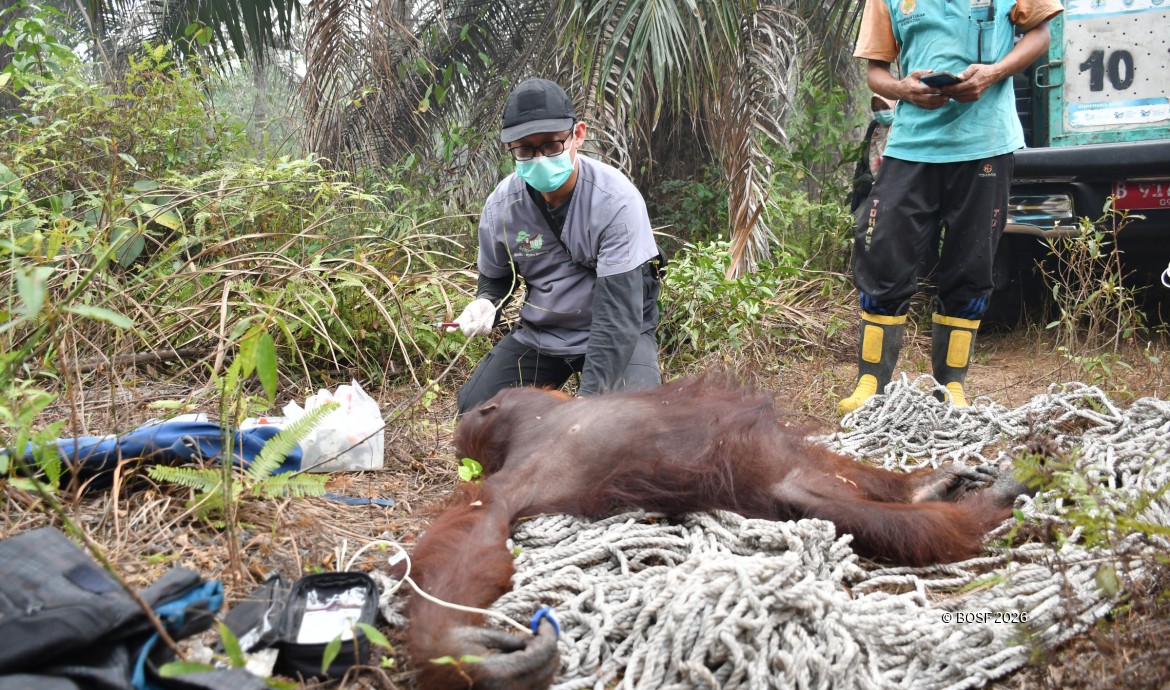
Veterinarian Agus Fahroni prepared the anesthetic, while officer Sugiharto readied the darting equipment. Around 3:10 PM WIB, the first dart struck the orangutan's back. Once the sedative took effect, the team secured and evacuated him using a rescue net.
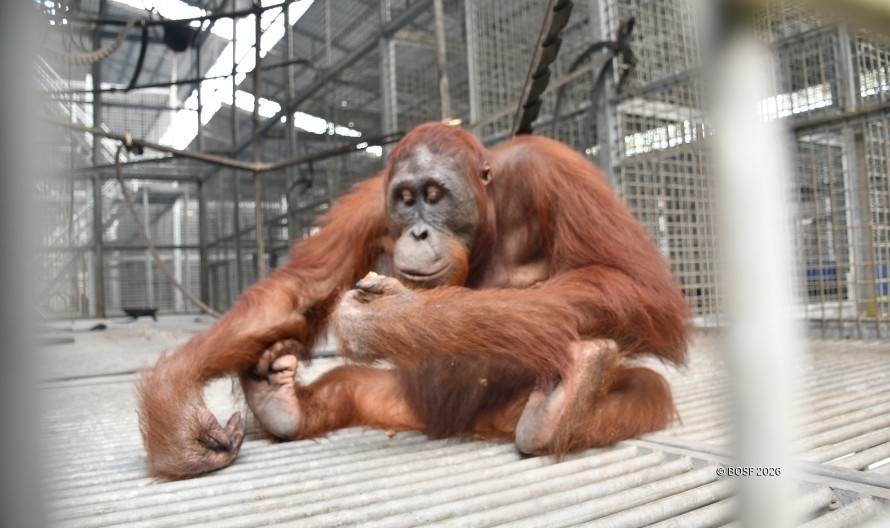
Initial medical assessments indicated that the male orangutan was estimated to be 9 to 10 years old. The team also found burn wounds on the toes and soles of both his feet. These injuries became the primary focus of his medical treatment, especially considering the orangutan was found in a weakened state right next to a burning forest.
The orangutan was subsequently named Andy and brought to the Nyaru Menteng Clinic to receive further medical care. Treatment focused on managing his burn wounds and closely monitoring his overall health, including the healing progress of the injured tissue.
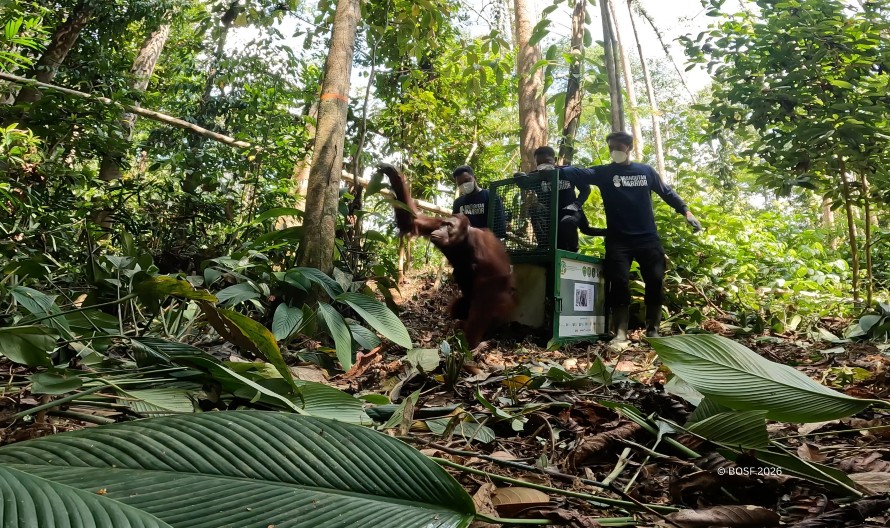
The rescues of Sri, Hampangen, and Andy highlight the diverse challenges teams face when orangutans are caught in emergency situations. Difficult terrain, limited visibility, and the need to safeguard both wildlife and personnel mean that every rescue operation requires meticulous planning and coordination.
Community reports, cross-agency cooperation, and the use of technologies such as thermal drones help teams locate and evacuate orangutans under demanding conditions. However, rescue efforts do not end once an orangutan arrives at a rehabilitation center. Medical check-ups, close monitoring, and ongoing care remain essential to ensure that each individual's needs are properly addressed according to their specific condition.