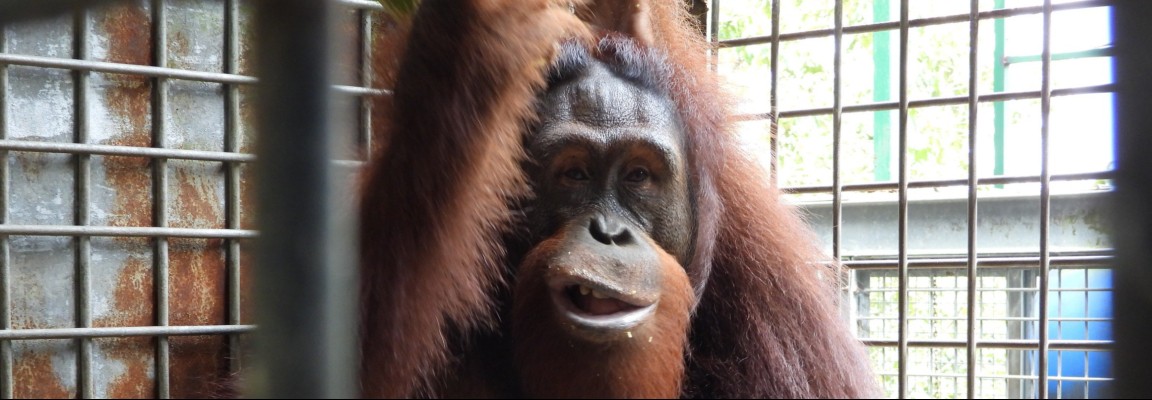
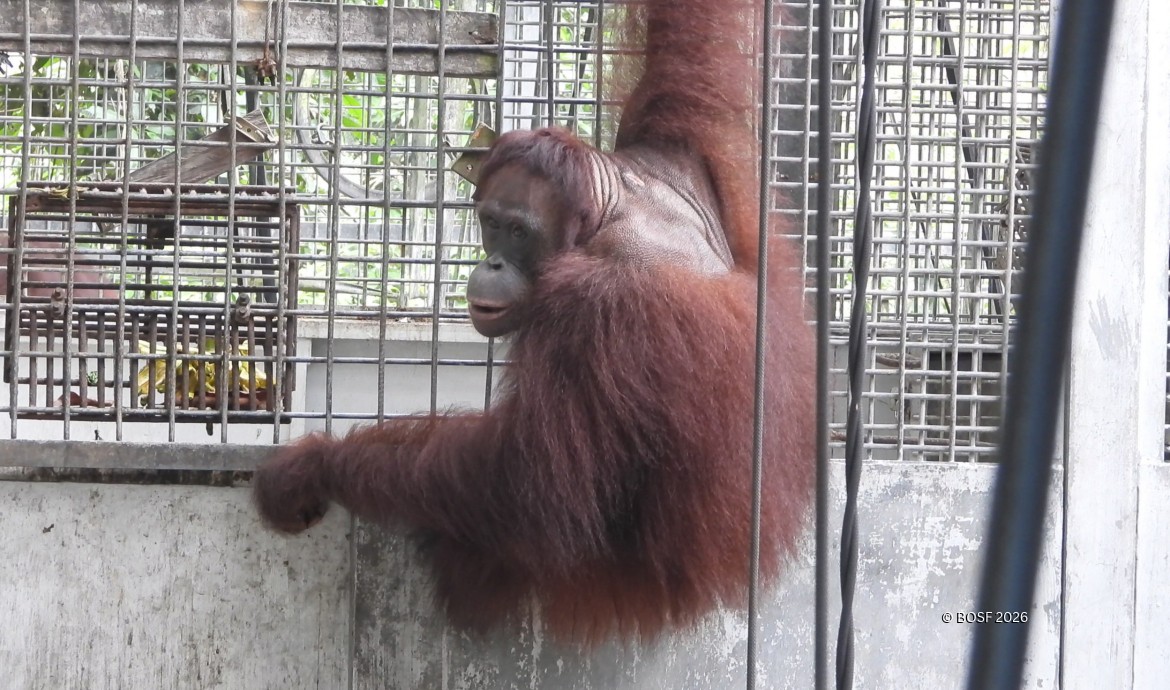
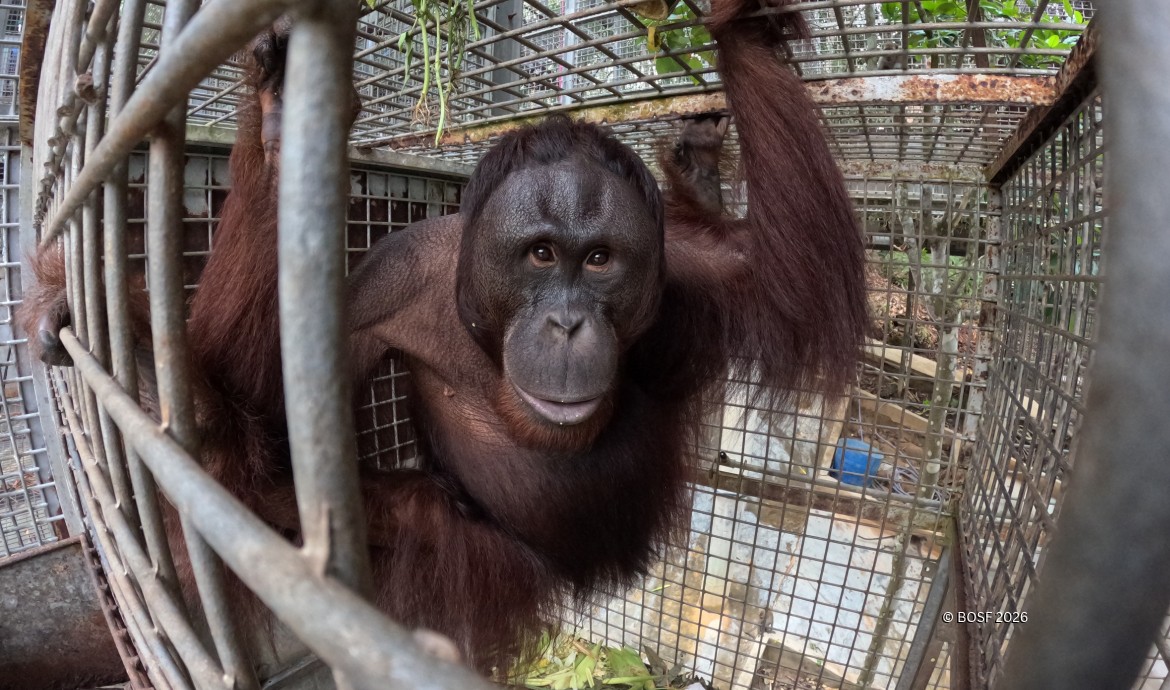
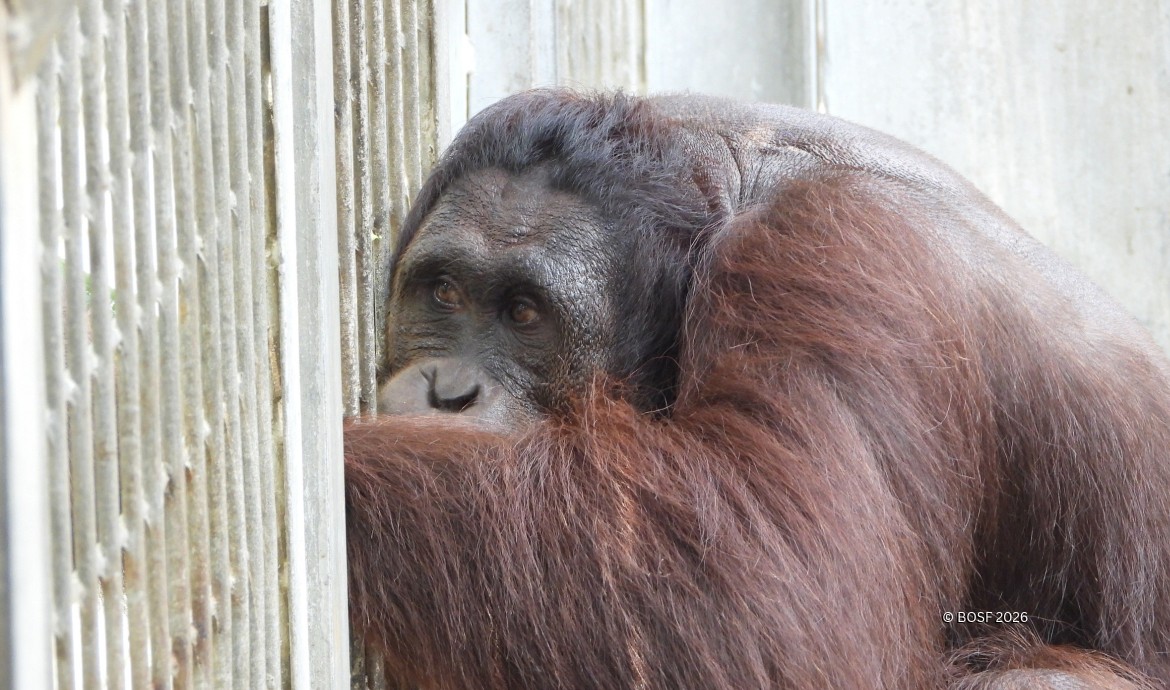
Behind every decision to release an orangutan lies a story that reflects the challenges of their previous lives.
At least, this applies to the orangutans Marlon, Ames, Dennis, and Catherine, each of whom has a story that ultimately led to their release.
Marlon, Who Is Vastly Different From His Mother
Born in a conservation environment (born captive) on November 13, 2015, at Samboja Lestari, Marlon was born to a mother named Merin and a male named Gino. Naturally, an orangutan infant absorbs most of its behavior from its mother. However, Marlon's life journey is quite unique because his character is actually the exact opposite of Merin's.
Merin is a circus performer at Gelanggang Renang Ancol. This background made Merin very clingy and accustomed to being close to humans. Conversely, since he was a baby, Marlon grew into an independent orangutan who was reluctant to be near animal technicians, often expressing this by vocalizing a kiss-squeak, a sign of discomfort for orangutans.
The dynamics of this mother-and-son relationship shifted further when staff moved both to Island 3 in 2021, along with another individual named Kopral. There, Kopral took on the role of caring for Marlon like a little brother, while Merin gradually became indifferent and chose to leave Marlon. When transferred to Socialization Enclosure B, Merin's refusal to care for Marlon became even firmer, until finally in March 2022, the BOS Foundation team decided to move Marlon to Forest School Level 1.
Marlon's independence grew even more in Forest School. He often resisted returning to the sleeping enclosure in the evening, even when coaxed with warm milk. Because he constantly avoided humans, Marlon was moved to Island 7 (Pre-release Island) on December 22, 2024.
On this pre-release island, Marlon's natural potential bloomed completely. He very rarely stepped on the ground and spent his time in the trees. Marlon often explored with Catherine, which made him increasingly skilled at foraging for natural food and a strong candidate for release.
Ames Learned to Survive Despite Being Abandoned by His Mother
Ames was rescued on September 24, 2016, when he was around 1–2 years old by a joint action of the BOS Foundation Team and the Kutai National Park Authority in Bontang from a resident's house in South Sangatta.
Ames's story stems from the 2015 forest fires. According to his former keeper, Ames's mother panicked in a burning tree and was forced to abandon her baby. Residents tried to return baby Ames to his mother several times, but the mother kept rejecting him until the baby was finally brought home. While living at the resident's house, Ames lived in an inappropriate environment as he was fed food that an orangutan infant should not consume.
When he first arrived at Samboja Lestari, Ames was a quiet, obedient orangutan baby, yet eager for affection and milk. During Forest School Level 1, Ames proved to be a bright student. Although his needy side appeared occasionally, Ames continued to show positive progress.
His maturity became even more evident when Ames was placed on Island 7. Although he initially spent a lot of time alone and on the ground because he was not yet familiar with others, Ames's natural instincts gradually emerged. He began actively climbing and learning to weave branches to build his own nests. His natural foraging skills were also impressive. The traumatic experience of being abandoned by his mother and taken into a human environment did not extinguish his natural ability to survive.
From Dennis and Catherine, We Learn That Orangutans Are Not Pets
The stories of Dennis and Catherine offer a profound lesson about the dangers of keeping wild animals as pets. Many people are misled by how cute an orangutan baby is, without realizing the harmful physical, psychological, and health impacts of keeping them illegally.
Dennis was rescued by BKSDA Samarinda on September 14, 2018, at the age of 2–3 years after being found by residents in a plantation area in Bengalon without his mother. For three weeks, kept under the name "Joni", Dennis was fed only bananas and water and kept locked in an empty house on a bed without a mattress. When picked up by the BOS Foundation medical team and babysitter, Dennis hugged the babysitter tightly, which could be a sign of trauma and fear.
Meanwhile, Catherine arrived at Samboja Lestari on June 29, 2019, at the age of 4 years after being rescued by BKSDA Tenggarong from a resident in Muara Badak. Kept under the name "Ayu", Catherine was placed in a cramped cage and fed only rice without ever knowing fruits. The trauma of being kept as a pet caused Catherine to grow into a defensive individual who often tried to bite when approached and suffered from a worrying physical condition with sparse hair.
Not only that, but Catherine also suffered from Air Sacculitis (air sac infection), a severe respiratory illness that required her to undergo intensive medical treatment in the Baby Nursery until a reflush procedure in September 2023.
However, through consistent rehabilitation, Dennis and Catherine managed to rise from their past traumas. Dennis himself grew into a very bright individual on Island 7. He recorded the highest percentage of natural food foraging among his peers, as well as strong nest-building skills.
Meanwhile, Catherine showed an extraordinary fighting spirit. After being declared free from Air Sacculitis relapse for 3 years, she became skilled at building nests high up in the tree canopy and almost certainly devoured any natural food around her.
Marlon, Ames, Dennis, and Catherine prove the long struggle of conservation. Differences in their backgrounds didn't stop them from expressing their natural wild instincts that had once been suppressed.
Monitoring on Pre-release Island 7 showed that these four orangutans met key criteria, including being skilled at choosing natural food, proficient at building nests high in trees, and able to adapt to the social climate of their fellow animals.
Their journey now enters the long-awaited final chapter. The Kehje Sewen Forest, an Ecosystem Restoration area covering more than 86,000 hectares in East Kalimantan, is ready to become their permanent home, where they will live their true lives as wild orangutans.