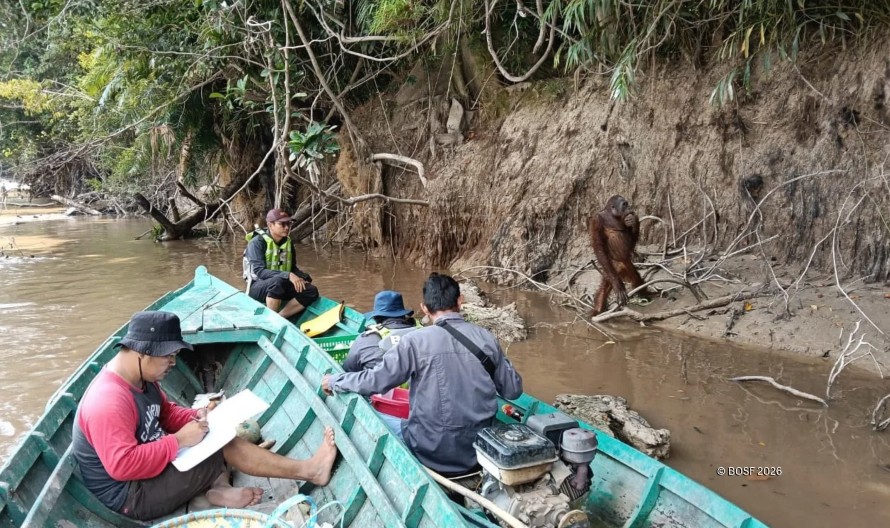
Moments of encountering released orangutans form an essential part of Post-Release Monitoring (PRM), as they allow for direct observation, enabling the team to monitor physical conditions, daily activities, foraging abilities, and nest-building skills of these wild orangutans.
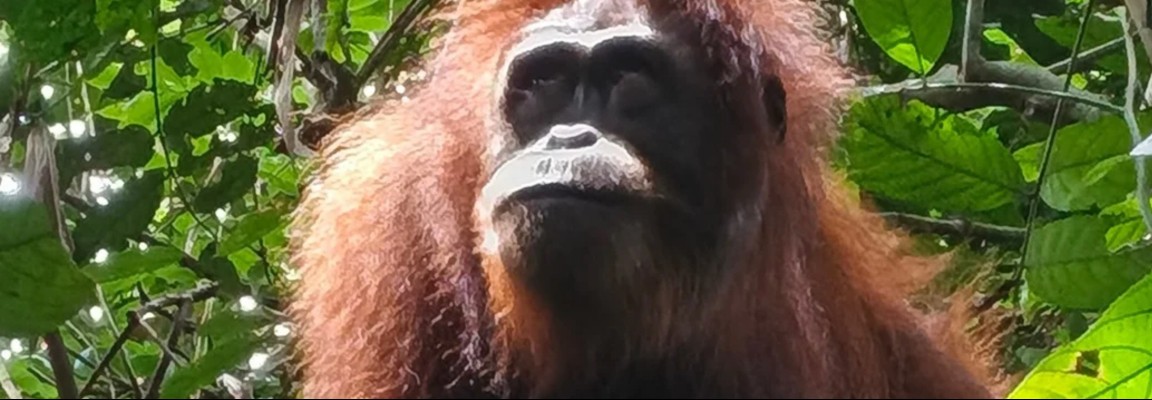
Fortunately, during one of the monitoring sessions, the PRM team successfully met two female orangutans, Meryl and Lykke. Let us take a look at the current progress of Meryl and Lykke.
Meryl, Skilled at Nest-Building
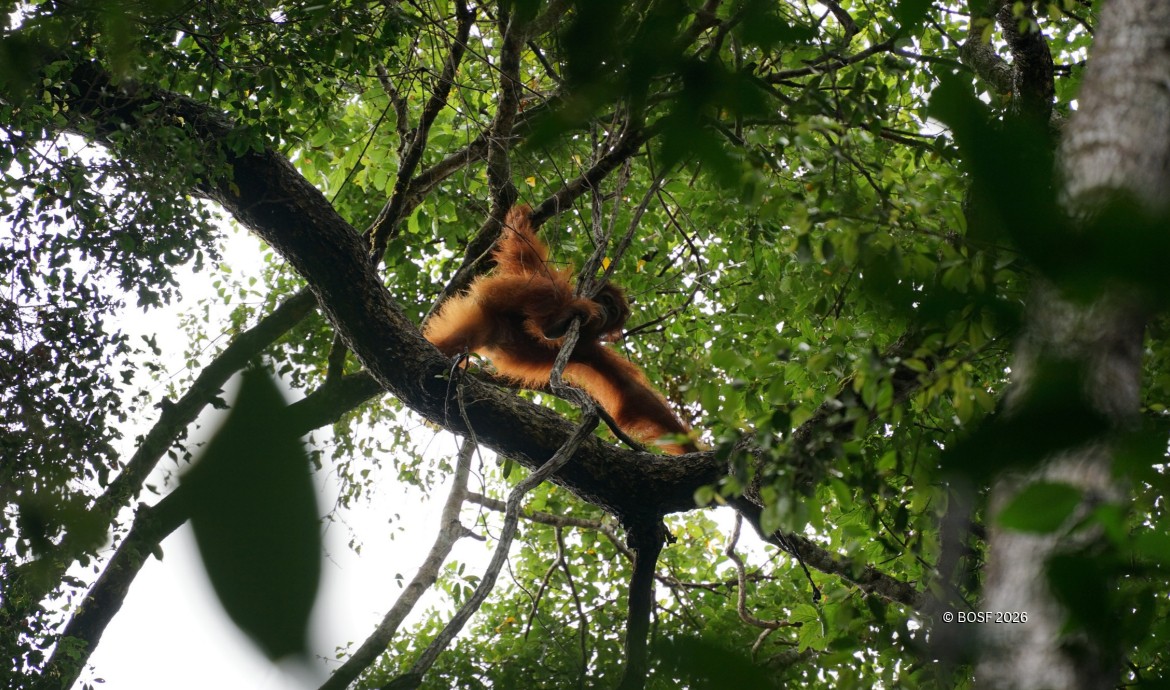
That morning, at around 08:30 WIB, the monitoring team's patience paid off. Meryl was spotted among the dense forest canopy. Observed for nearly eight hours, Meryl appeared to be in good condition, remaining active with no signs of injury or physical distress.
Her activities were dominated by three main behaviors: foraging, resting, and exploring the surrounding area. The food she consumed included leaves, plant shoots, and forest fruits.
In addition, Meryl demonstrated her nest-building expertise not just once, but twice, creating a day nest and a relatively new night nest.
The day nest was built at a height of approximately 11–15 meters, which Meryl used to rest before resuming her activities. As night approached, Meryl constructed another new nest at a height of about 16–20 meters.
The ability to build nests is a crucial skill for orangutans to survive in the wild. Observations of Meryl show that her skills are highly relevant in supporting her life in her natural habitat.
Lykke, Actively Foraging
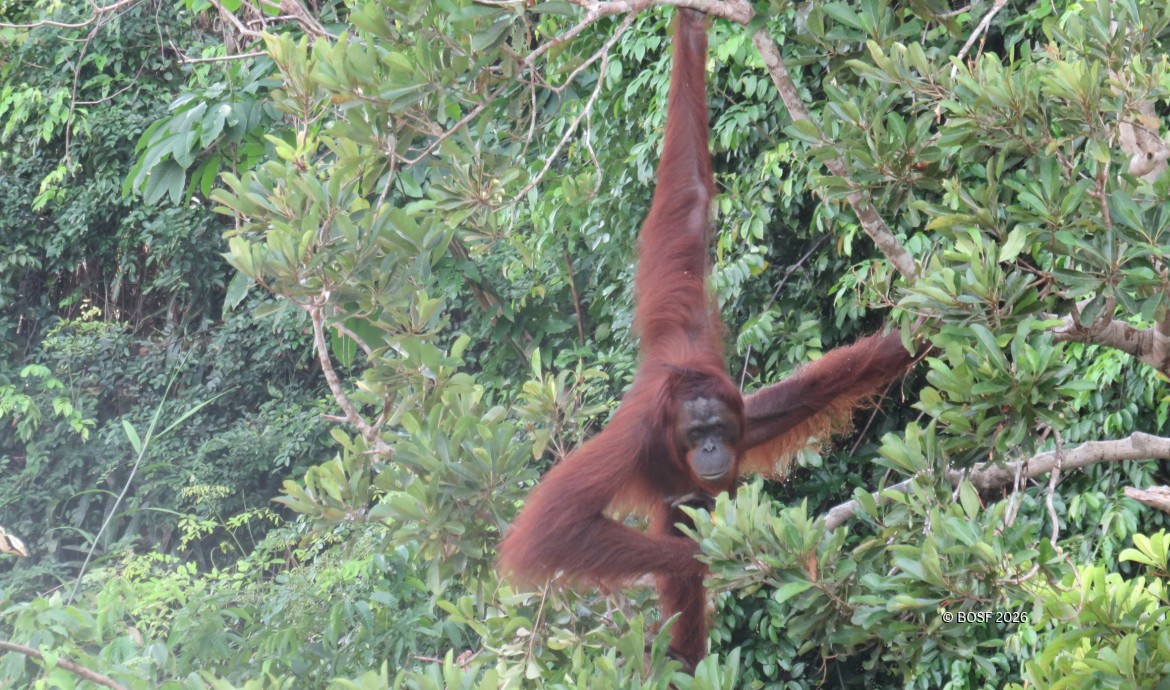
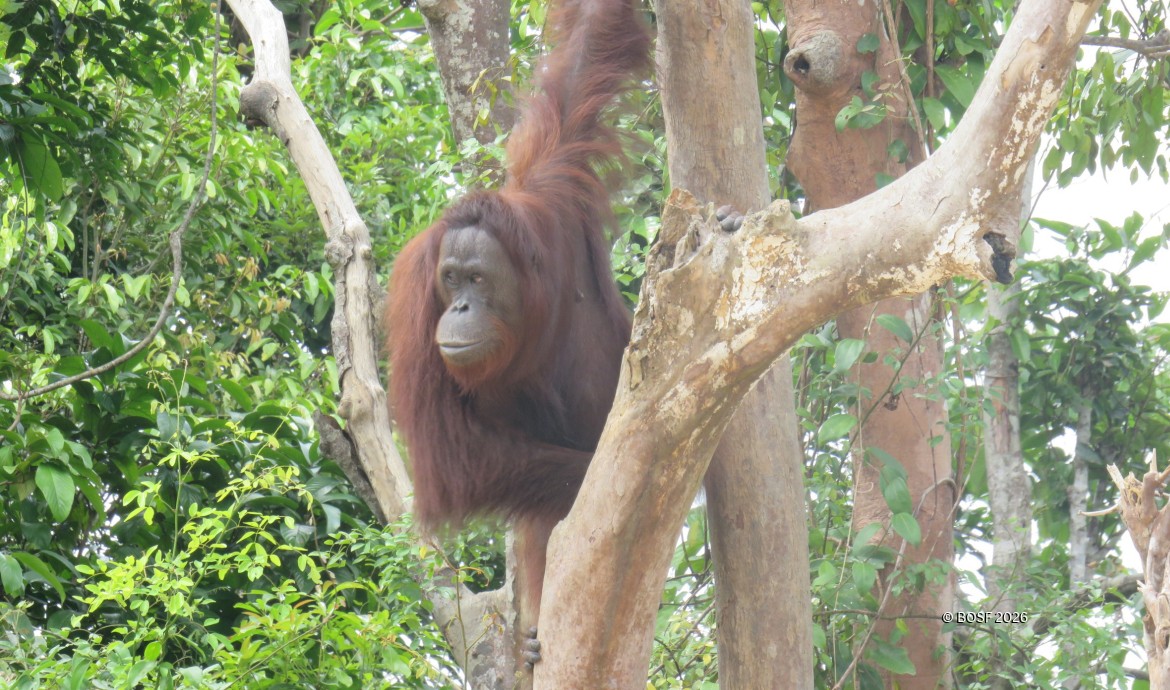
Good news also came from Lykke, who was found not far from Meryl's location. The PRM team encountered Lykke while exploring the forest area.
When first spotted, Lykke was eating suli shoots. Her physical condition appeared good, with her activity levels and alertness well-maintained.
Most of Lykke's activities during observation were spent searching for and consuming food, interspersed with movement from tree to tree. She utilized various natural food sources, including plant shoots, young leaves, and fruits.
Lykke demonstrated that she makes good use of the diverse daily resources available around her.
Toward the late afternoon, an apparently tired Lykke chose to rest. She gathered and arranged branches atop a lentang tree (a type of meranti) at a height of around 16–20 meters to construct a nest.
Interestingly, Lykke built her nest in less than six minutes, displaying well-developed nest-building skills since her release.
Observing Meryl and Lykke provides us with an opportunity to witness firsthand how released orangutans carry out their daily activities in the wild.
Every encounter like this offers vital information for us to monitor orangutan progress after release. Beyond simply confirming their presence in the forest, these observations help the team understand how each individual adapts and navigates life in their natural habitat.