


ENCOUNTER WITH ORANGUTANS MERYL AND LYKKE
Post-release monitoring allows us to observe orangutans in the wild. Recent sightings of Meryl and Lykke in TNBBBR show both female orangutans actively foraging and displaying excellent nest-building skills.


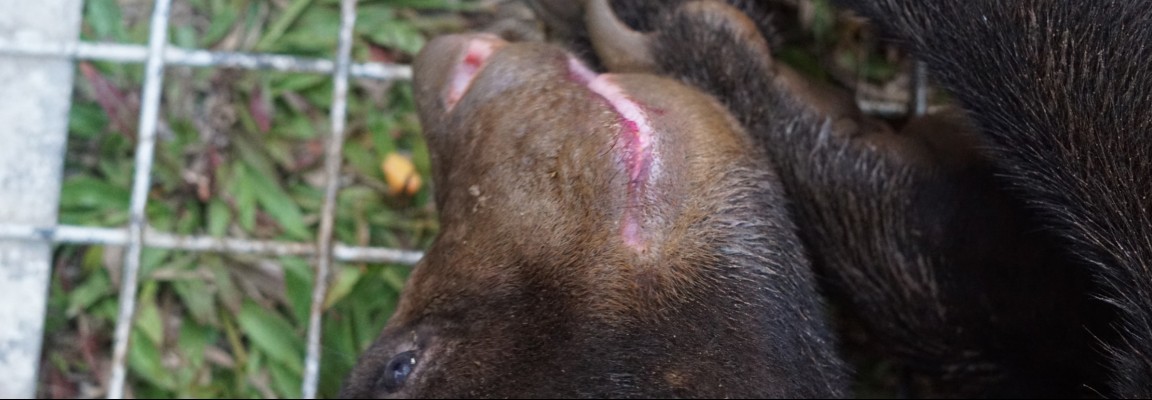
Apart from orangutans, sun bears also face various pressures due to habitat changes and interactions with humans. This is driven by their increasingly limited food sources and living space, forcing sun bears to enter areas close to settlements in search of food.
This exact situation happened to Rose, a young female sun bear found in a very weak condition after entering a residential area. Follow the complete story of how our joint team rescued Rose.
Rose's rescue journey began in Suka Rahmat Village, Teluk Pandan District, East Kutai Regency, which directly borders the Kutai National Park conservation area. Rose was identified as a female sun bear estimated to be around 1–2 years old.
Rose's presence was first discovered when she entered a resident's yard and became trapped in a pond in a weakened state. Residents of Suka Rahmat Village then secured her and reported the incident to the Kutai National Park Wildlife Rescue Unit (WRU) Team.
On August 29, 2026, the WRU Team of East Kalimantan BKSDA brought Rose to Section Region II Tenggarong for initial treatment and monitoring. However, after two days, her condition had not improved, so Rose was referred to the BOS Foundation Rehabilitation Center at Samboja Lestari for further care.
Mr. Witono and Mr. Rivai from Section Region II Tenggarong BKSDA accompanied Rose on her journey to Samboja Lestari. Rose arrived at around 17:00 WITA and was immediately taken to the Animal Clinic.
When the medical team and technicians approached her crate, Rose showed a defensive response by struggling and vocalizing as a form of self-defense. After initial procedures were performed, Rose was transferred to a larger clinic cage using a door-to-door method.
Her physical condition at that time was extremely weak. Rose could only crawl out of the crate and was unable to stand properly. Once inside the new enclosure, she mostly lay down and required intensive monitoring.
The medical team then provided oral rehydration fluids, which Rose accepted well. To help meet her energy needs, technicians also offered food in the form of dragon fruit and mango, which Rose immediately ate.
As part of the initial treatment, drh. Muhtadin Wahyu administered vitamins and supportive supplements. Rose was then placed in a specialized care room at the Samboja Lestari Animal Clinic so her vital conditions could be intensively monitored 24 hours a day.
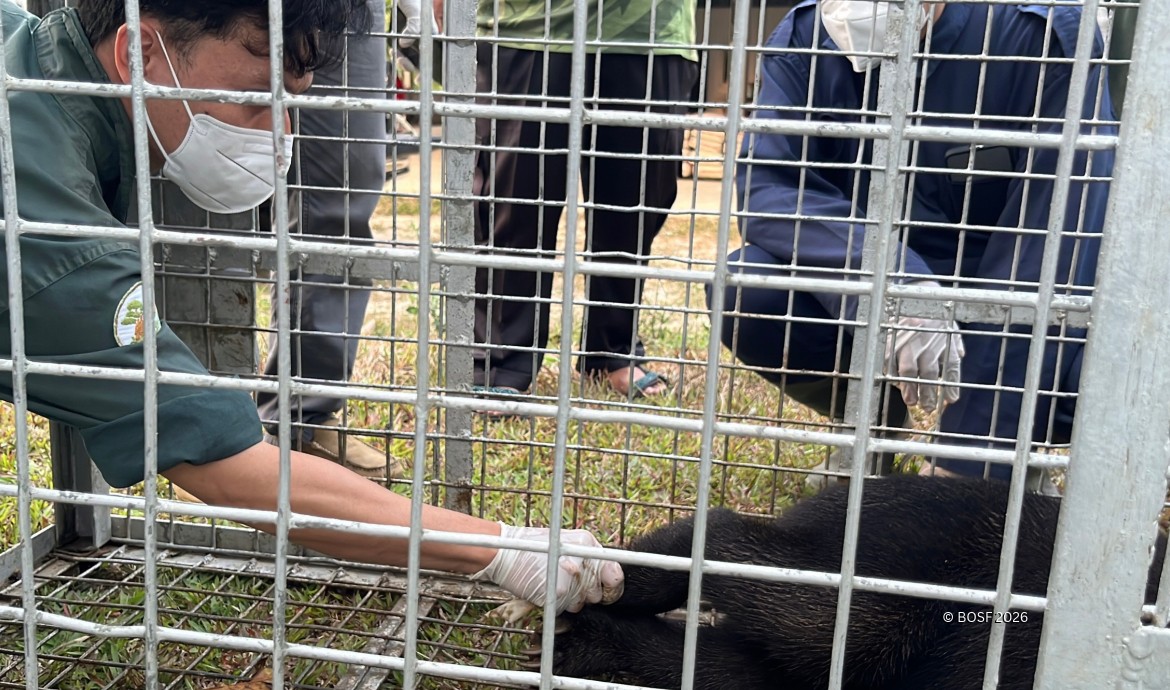
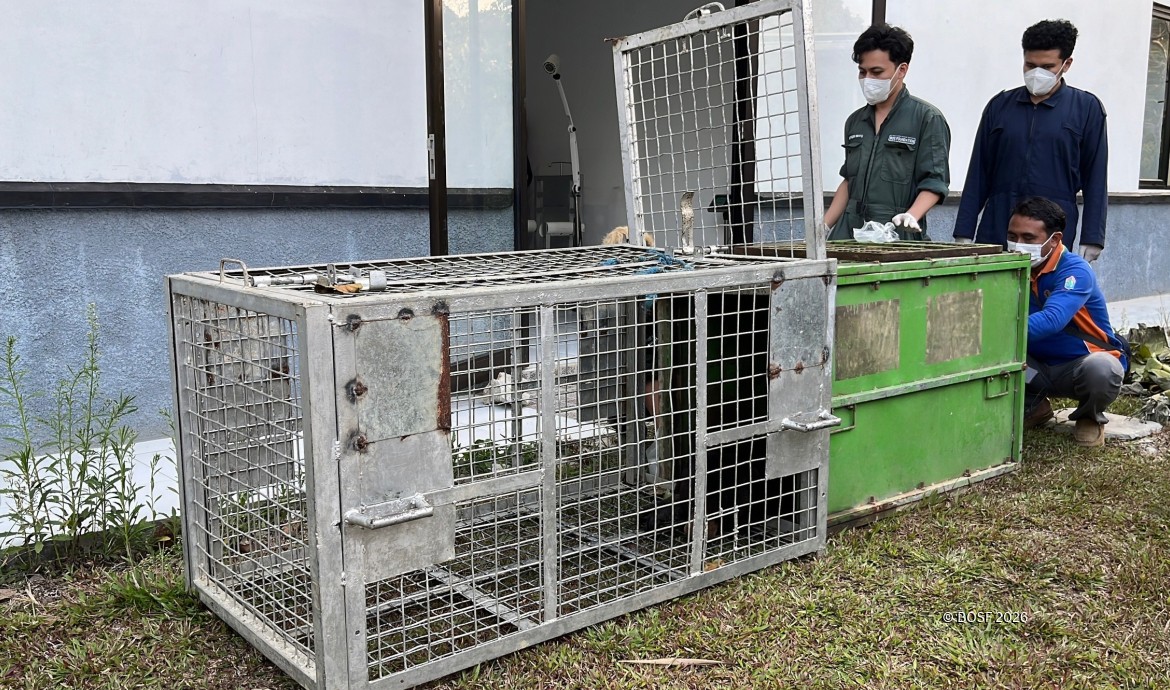
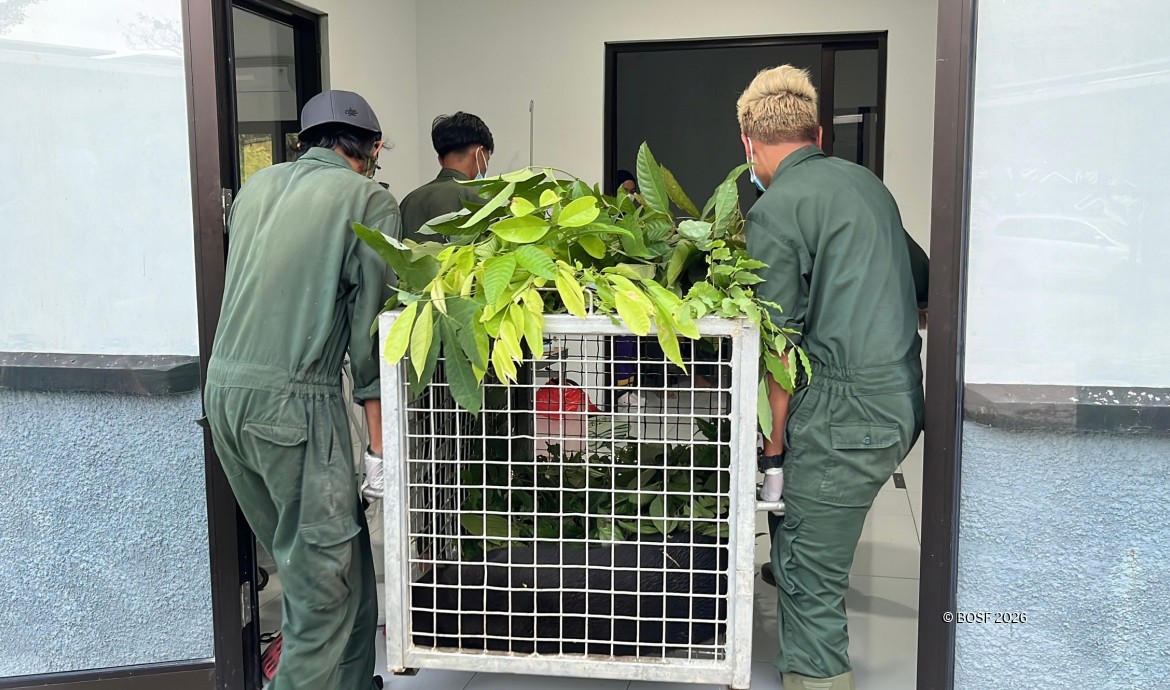
Evacuated wild animals are not always found in healthy conditions. Some arrive in weak, emaciated, dehydrated states, or with other health issues.
These conditions are usually affected by an expanded home range required to meet nutritional needs that have been lost from their previous habitat. Furthermore, having to adapt to new environments can also serve as a source of stress and increase the risk of injury.
Therefore, the physical condition of wild animals found near human settlements needs immediate examination to determine required medical treatment. In Rose's case, her severely weakened body meant the rescue process had to be followed by intensive monitoring and care.
Rose's story serves as a reminder that encounters between wild animals and humans are often a sign of broader environmental pressures. As habitats and food sources change, animals may enter human territory, putting their safety at risk.
In these situations, the community's response becomes crucial. The decision of Suka Rahmat Village residents to report Rose's presence to authorities gave rescuers the chance to provide appropriate intervention.
For Rose, the journey toward recovery has just begun. With medical care, intensive monitoring, and treatment tailored to her condition, the BOS Foundation team continues to work toward giving Rose the best chance to fully recover.


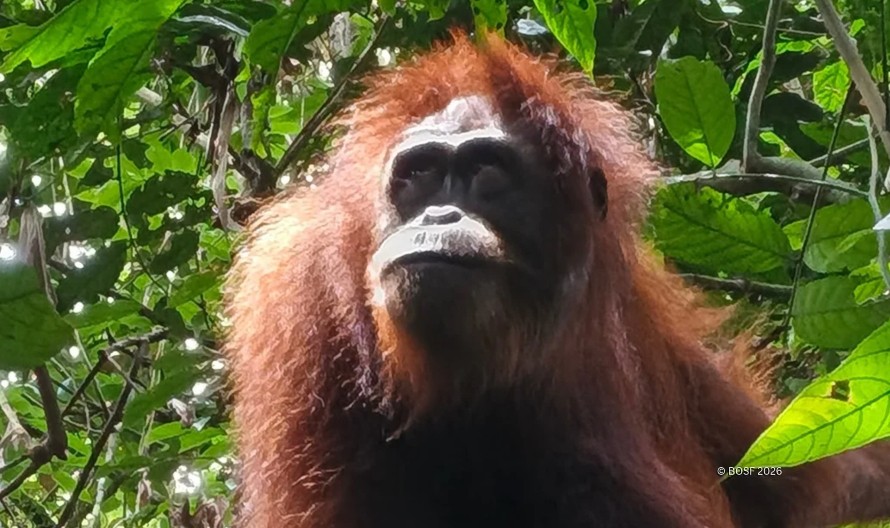
Post-release monitoring allows us to observe orangutans in the wild. Recent sightings of Meryl and Lykke in TNBBBR show both female orangutans actively foraging and displaying excellent nest-building skills.
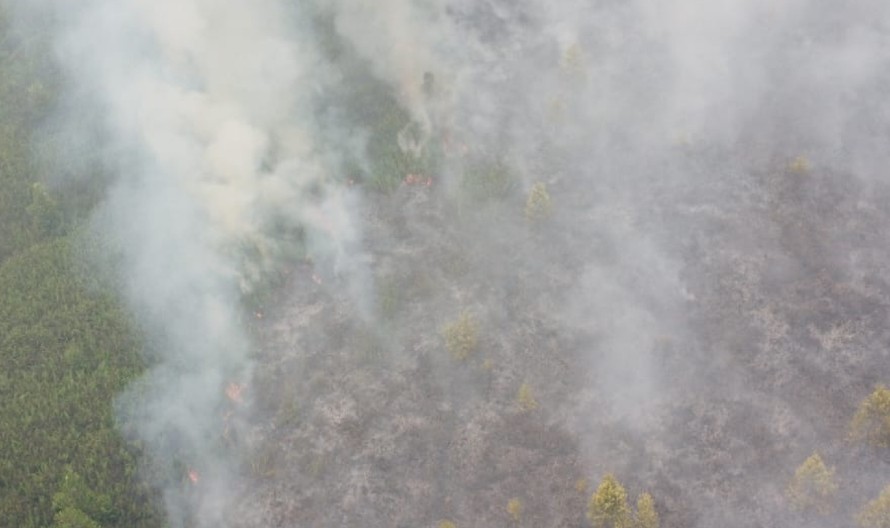
Forest fires create a hidden crisis for wildlife. Beyond destroying habitats, smoke exposure threatens orangutans' health, restricts food and water, and violates core animal welfare principles across Kalimantan's ecosystems.
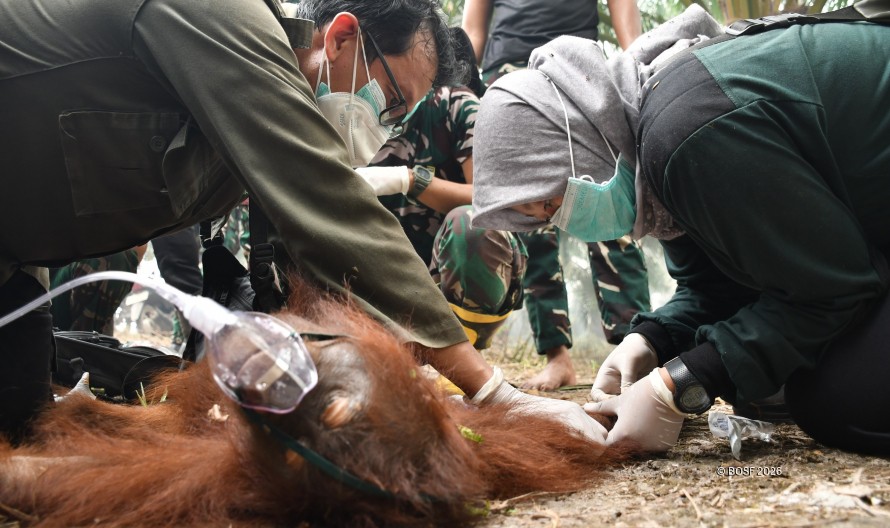
When forest fires strike, orangutans face a deadly fight for survival. Trapped atop a burning tree in Central Kalimantan, baby orangutan Novita was rescued through a joint emergency effort by BKSDA, BOS Foundation, TNI AD, and local residents.
