An orangutan release is never simply a ceremony, more often than not, it is deeply emotional. This is not only because of the bond that forms between the orangutans and the people who care for them, but also because of how challenging and unpredictable the journey itself can be.
You might easily come across release videos on social media that look exciting and straightforward, but the reality on the ground is far more than that. It is not only the unfolding dynamics that make a release journey so meaningful, the landscape itself is bound to leave you in awe. Curious about the details? Read our full story here.
A Challenging Overland Journey
Before being released, every orangutan first undergoes a health examination. The purpose of this screening is to assess whether the individual carries any transmissible disease, because if an undetected illness slips through, the worst-case scenario is its uncontrolled spread to orangutans that have already been released into the wild.
Once an orangutan is confirmed healthy, the next step is preparing for a nighttime journey. Why at night? Because orangutans tend to be calmer after dark, and are less disturbed by the process of being transported.
Throughout the journey, the vehicle stops every two hours not to rest, but to check that the orangutan remains safe, comfortable, and stable. But the release team wouldn't quite be themselves if everything went smoothly.
There was one occasion when the team got lost deep in the dark forest, some 40 kilometers from the intended release point, with no internet connection to help them find their way.
After attempting to turn back and locate the correct route, another challenge was already waiting: one of the vehicles suffered a flat tire, costing even more time and putting both the team and the orangutans in an increasingly tight race against the clock.
As a result, the release that day could only take place far later than originally planned.
A Meeting With an Alpha Orangutan
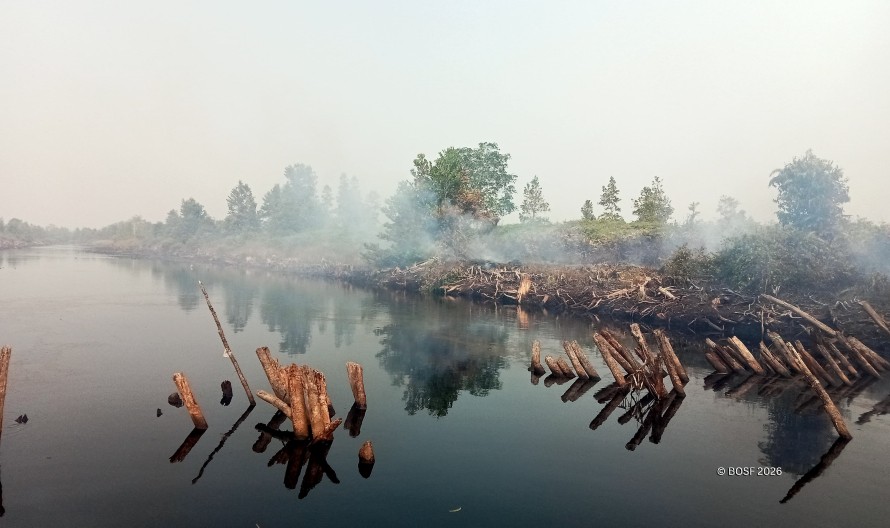
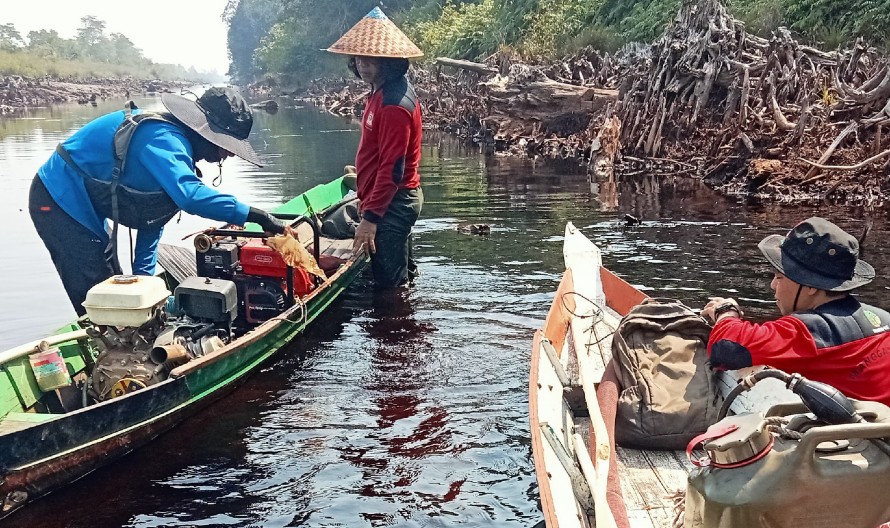
Upon reaching the transport transfer point, the entire team immediately carried the crates onto the klotok and continued the journey by river. The process moved quickly because the longer the journey was delayed, the longer the orangutans would have to wait to be released, making them increasingly restless and unsettled.
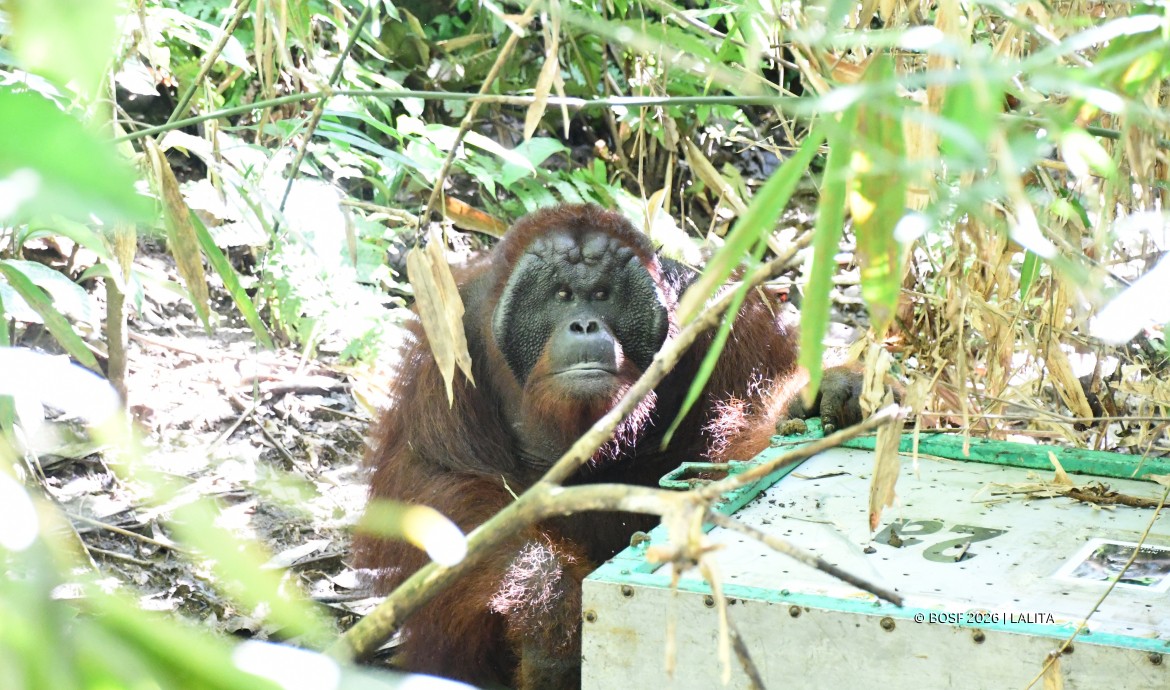
Upon arriving at the release site, two orangutans named Semeru and Farida were released first. As the team prepared to open the crates for Himba, Lyke, and Nett, a call suddenly rang out from Franky a dominant male orangutan that had previously been released into the wild.
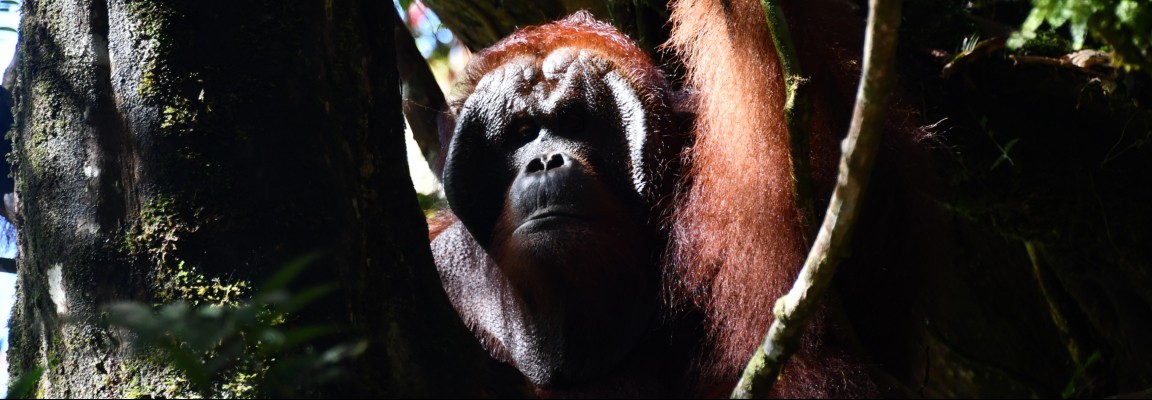
Dominant male orangutans are recognizable by their broad cheek pads and large bodies, and Franky emerged from the forest canopy in full display. Although he had originally been released at a distant location, he had since ranged all the way to this newest release site.
Following standard procedure, the orangutans' safety was made the top priority. The team gave them space to keep everyone calm and undisturbed.
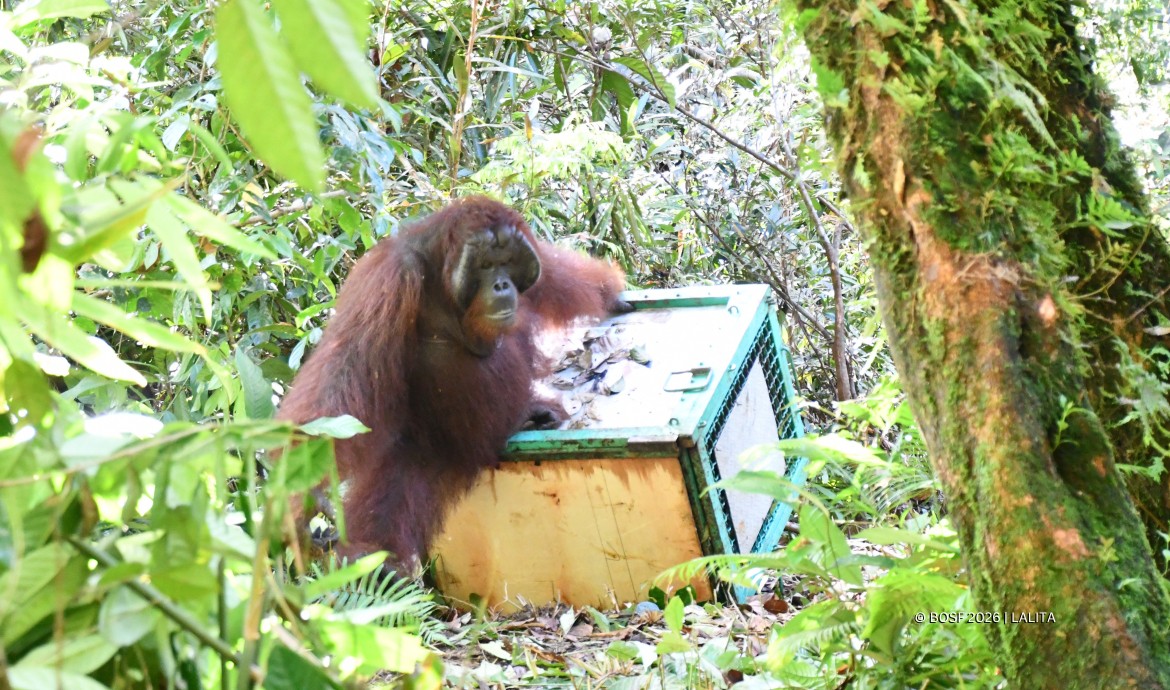
As it turned out, Franky became drawn to the now-empty transport crate, perhaps because it was a familiar object, one associated with his own path to freedom. Moments like this are extremely rare, and the entire team found themselves holding their breath.
With Franky clearly established as the dominant presence in the area, the team made the decision to relocate the release point for the remaining three orangutans to a safer location.
Why Choosing a Release Site Is Never as Simple as It Looks
The encounter with Franky revealed something the public rarely gets to see: finding the right location for a release is one of the most complex stages of the entire process, and it begins long before the journey ever starts.
A location cannot simply be designated as a release site. A series of requirements must first be met, covering everything from the elevation of the area, the availability of natural food sources within the forest, security from planned land exploration and exploitation, a minimal or entirely absent wild orangutan population, to a sufficient distance from human settlements.
Even after an area is confirmed to meet all of those criteria, the team must verify one more thing such as that food availability in that location is genuinely adequate. To do this, the monitoring team first conducts a phenology survey to map the types and quantities of food trees present in the area down to their Latin names before a site is truly considered suitable for the orangutans about to be released there.
There is also another requirement that is just as strict: the genetic origin of each orangutan. Every individual must be released in an area that corresponds to its own subspecies. An orangutan from East Kalimantan, for example, may only be released in East Kalimantan, the same applies to Central Kalimantan and West Kalimantan. There are even cases where an orangutan that has grown up and been rehabilitated in one region, upon undergoing DNA testing ahead of release, turns out to belong to the subspecies of another region entirely, meaning the entire release plan must be revised from the start.
The challenges do not end there. The presence of a dominant individual like Franky in a given area is a reminder that even after a location has passed every stage of the selection process, field conditions can shift at any moment. This is precisely why the monitoring process does not end the moment the crate is opened. The post-release monitoring team continues to track the movement of each individual using radio tracking, GPS, and a compass ensuring that they are truly able to adapt, locate food sources independently, and avoid conflict with other orangutans or humans in the surrounding area.
All of this complexity explains why a release can never be considered complete simply because the crate has been opened and an orangutan has stepped freely into the forest. It is precisely at that moment that an equally important new chapter has only just begun.
This is proof that every release carries its own unpredictable dynamics and an unspoken depth of dedication, one that words alone can never fully capture all in service of a single purpose is bringing every orangutan home.