A CLOSER LOOK AT MANGGO AND MELKI IN BUKIT BATIKAP
Recognizing natural food sources is one of the essential skills orangutans must develop before they can be released back into the wild. Throughout rehabilitation, they learn to identify edible plants, fruits, and natural protein sources in the forest. These skills are vital for their long-term survival once they return to their natural habitat.
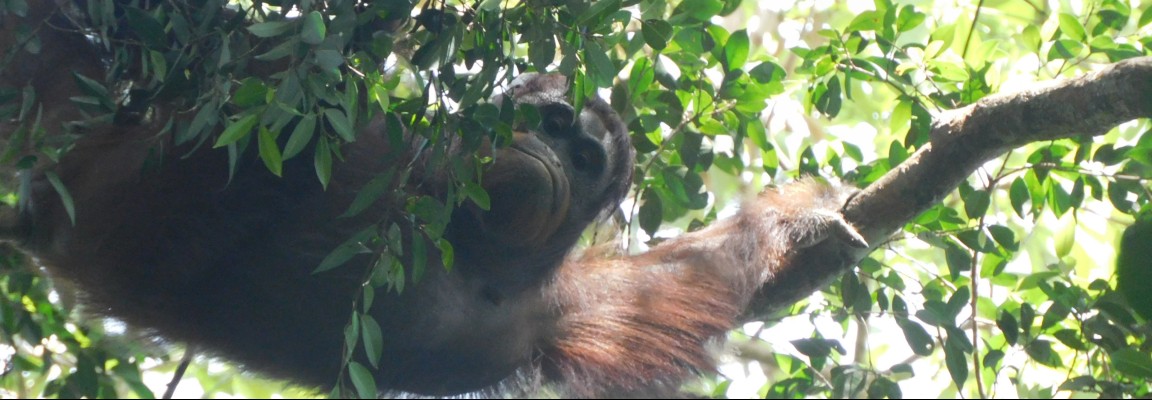
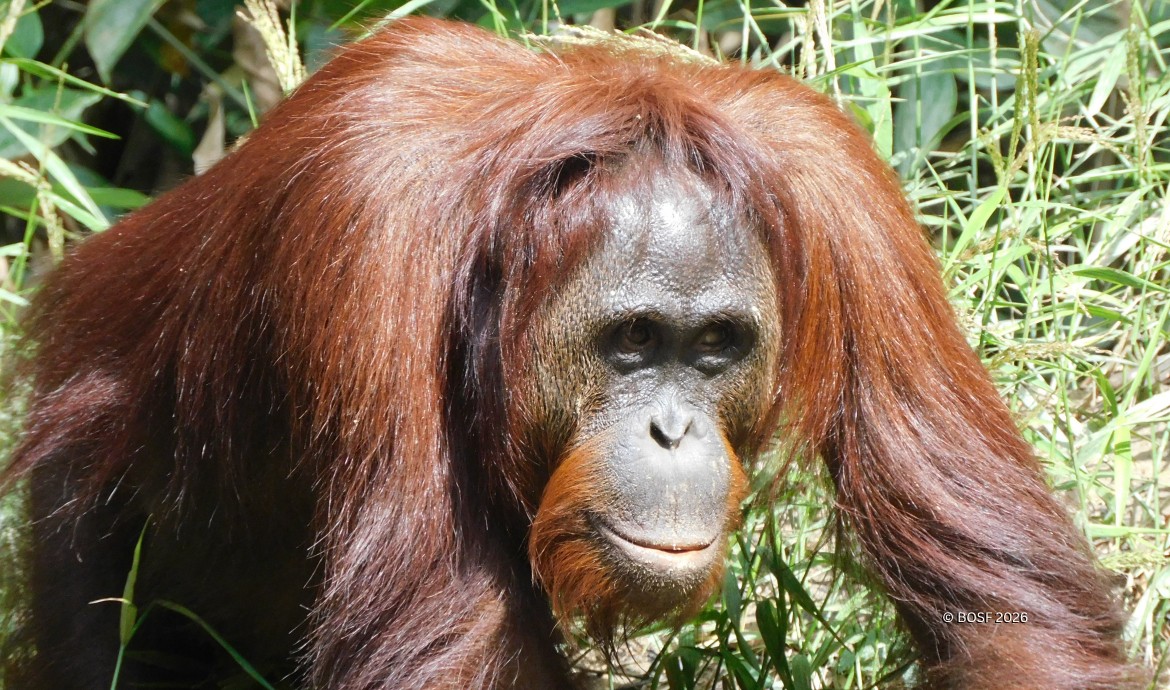
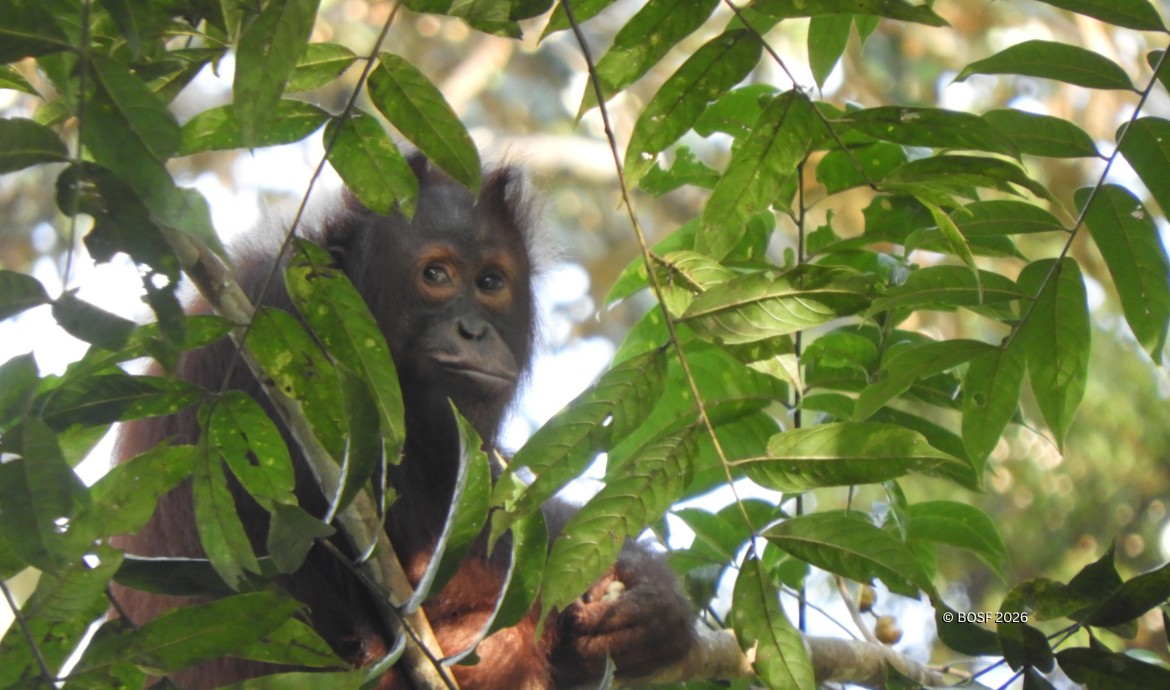
During a routine Post-release Monitoring (PRM) patrol in Bukit Batikap Protection Forest, the monitoring team observed a mother-and-infant pair, Manggo and Melki, over three consecutive days near the main transect. Their observations offered valuable insights into how a mother orangutan teaches her young the skills needed to thrive in the forest.
Learning to Recognize Natural Food Sources
When first encountered, Manggo and Melki were feeding on Sengkuang fruit (Dracontomelon dao). Observations began at 1:40 p.m. and continued until the pair built their night nest at around 6:00 p.m.
On the first day, Manggo spent much of her time feeding on Sengkuang fruit and young Lunuk leaves (Ficus spp.). Melki stayed close to his mother and was observed feeding alongside her several times. For young orangutans, these moments are an important part of learning to recognize the natural food sources that will sustain them throughout their lives. Young orangutans spend around 7–9 years with their mothers, the longest period of maternal care among land mammals. During this time, they learn nearly all the skills they need to survive in the wild, including how to identify hundreds of natural food sources.
The following day, the team conducted a nest-to-nest observation, following the pair from the moment they left their sleeping nest in the morning until they built another nest in the evening.
Throughout the second day, Manggo fed on a diverse range of foods, including Sengkuang fruit, Hampaning fruit (Lithocarpus sp.), palm hearts (young palm shoots), and termites as a valuable source of protein. Melki was again observed feeding alongside his mother, demonstrating how young orangutans learn by carefully watching and imitating their mothers' behavior.
On the third day, their daily routine remained much the same. Manggo fed on Sengkuang fruit, Banuang fruit, and young Lunuk leaves, while Melki stayed close by and continued to share feeding opportunities with her. These close interactions play a critical role in a young orangutan's development, allowing them to learn how to identify edible foods, select appropriate plant parts, and forage safely in the forest.
Over the three-day observation period, both Manggo and Melki appeared healthy and active, as reflected in their consistent feeding patterns and normal daily activities.
Their final night nest was located near the main transect, approximately 16–20 metres above the forest floor. Classified as a Type A nest, it measured roughly 1–1.5 metres in diameter and was built in a tree standing about 21–25 metres tall. Melki was still sharing the nest with his mother, indicating that he remains highly dependent on her—a natural stage in an orangutan's early development.
Observations of mother-infant pairs, such as Manggo and Melki, provide valuable information on daily activity patterns, feeding ecology, infant learning, and the health of wild orangutans. These observations also help the monitoring team assess how successfully released orangutans are adapting to their forest habitat and whether they can survive independently.
Manggo and Melki's story reminds us that learning continues long after an orangutan is released into the wild. Every day in the forest offers new lessons, as young orangutans watch their mothers to learn where to find food, how to build nests, and how to navigate the complex environment that will one day become theirs alone.
By protecting forests, we help ensure that stories like Manggo and Melki's continue for generations to come, giving young orangutans the opportunity to grow, learn, and thrive in the place they truly belong.