


ENCOUNTER WITH ORANGUTANS MERYL AND LYKKE
Post-release monitoring allows us to observe orangutans in the wild. Recent sightings of Meryl and Lykke in TNBBBR show both female orangutans actively foraging and displaying excellent nest-building skills.


The possibility of a strong El Niño developing in 2026 has become a growing concern for governments, scientists, and conservation organizations alike. For BOS Foundation, the threat extends far beyond a prolonged dry season. An extreme El Niño could significantly increase the risk of forest and peatland fires, placing orangutan habitats at greater risk while disrupting rehabilitation, reintroduction, and long-term forest protection efforts.
Indonesia's Meteorology, Climatology and Geophysics Agency (BMKG) has issued an early warning regarding the increased likelihood of drought conditions should El Niño strengthen in 2026. Such conditions could substantially elevate the risk of forest and land fires, particularly across the peatland ecosystems of Sumatra and Kalimantan.
The El Niño–Southern Oscillation (ENSO), characterized by unusually warm sea surface temperatures in the central and eastern Pacific Ocean, has historically reduced rainfall across Indonesia. Beyond bringing longer and drier dry seasons, ENSO has repeatedly contributed to large-scale forest and peatland fires, most notably during the devastating 2015 wildfire crisis.
The catastrophic fires of 2015–2016 fundamentally reshaped how BOS Foundation prepares for climate-related emergencies.
During that period, fires intensified by El Niño destroyed 266 hectares of reforested land in Samboja Lestari and damaged approximately 15,442 hectares of orangutan habitat within the Mawas landscape. Nationally, more than two million hectares of forests and peatlands were affected. The consequences extended far beyond environmental damage, disrupting conservation operations, affecting public health, and undermining the stability of entire ecosystems.
For BOS Foundation, the crisis had immediate operational impacts. Hazardous air quality persisted for more than two months in Central Kalimantan, forcing the temporary closure of the Forest School at Nyaru Menteng. Wildfires also came dangerously close to the rehabilitation centre before joint firefighting teams successfully contained the flames. These experiences demonstrated that the consequences of large-scale fires extend well beyond the loss of forest, they disrupt every stage of orangutan rehabilitation and conservation.
The sharp increase in rescued orangutans provided a clear indication of the immense pressure placed on wild populations. During this period, dozens of orangutans were rescued from burned and degraded habitats, including 76 individuals from the Mangkutub area in what became one of the largest orangutan rescue operations ever undertaken by BOS Foundation. In 2016 alone, the Foundation received 98 new orangutans requiring rescue, rehabilitation, and long-term care.
Emergency translocation, however, is never without challenges. Moving orangutans to new habitats requires careful assessment of habitat carrying capacity, potential competition with resident individuals, adaptability, and long-term survival prospects. Every translocation is therefore guided by rigorous scientific assessment and careful technical evaluation.
The experience also transformed BOS Foundation's approach to wildfire preparedness. Rather than focusing primarily on emergency response, the organization began developing a more comprehensive preparedness system through improved firefighting capacity, specialized equipment, and long-term mitigation planning built around both landscape management and community engagement.
Recovery efforts further reinforced another important lesson: restoring an ecosystem takes far longer than destroying one. Together with numerous partners, BOS Foundation initiated large-scale reforestation in fire-affected areas of Samboja Lestari and Mawas as part of its long-term commitment to restoring critical orangutan habitat.
These experiences continue to shape BOS Foundation's wildfire preparedness today.
"Our experience in 2015 showed that when large-scale wildfires occur, their impacts are felt across every aspect of conservation, from habitat loss and the sharp increase in orangutans requiring rescue to major disruptions in rehabilitation operations. It taught us that preparedness cannot begin once a crisis has already unfolded. That is why we continue to strengthen prevention measures, early detection systems, firefighting capacity, and collaboration with government agencies, local communities, and our partners to minimize the risks posed by future El Niño events," said Dr. Ir. Jamartin Sihite, Chief Executive Officer of BOS Foundation.
Also read:
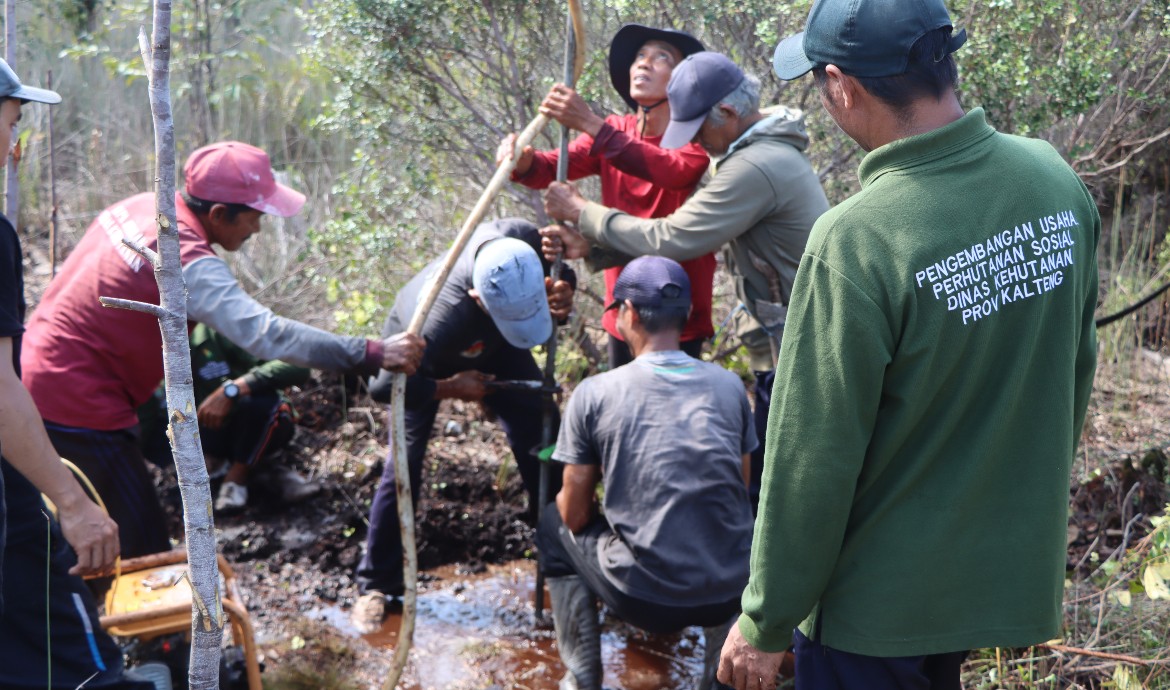
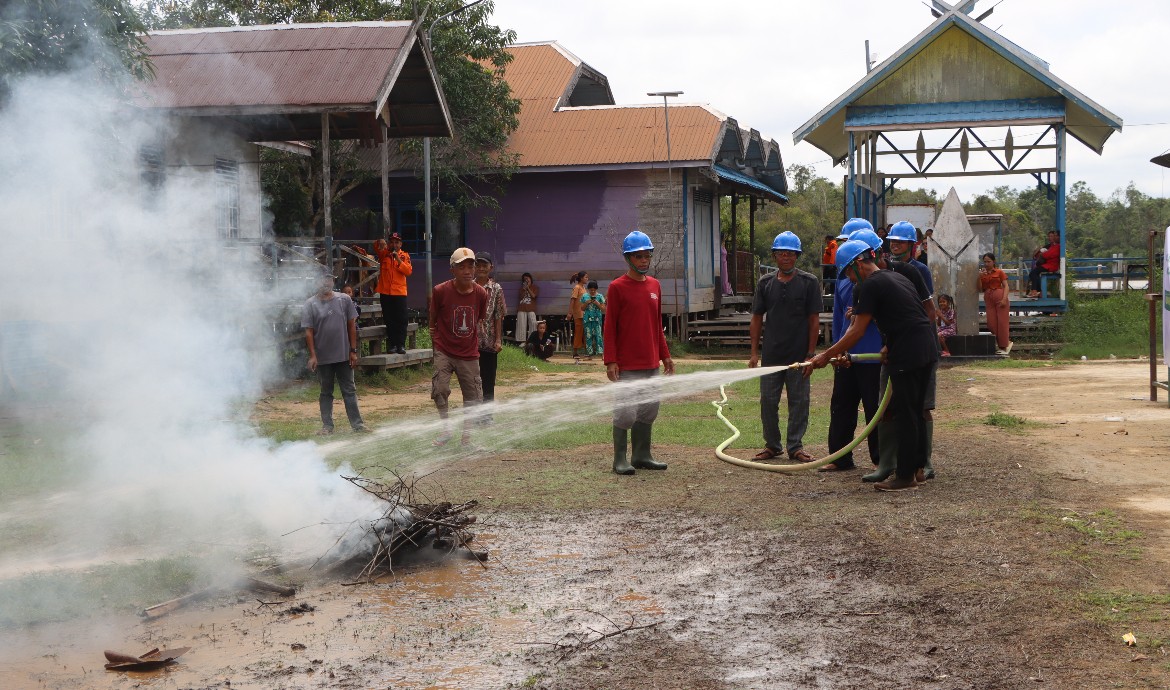
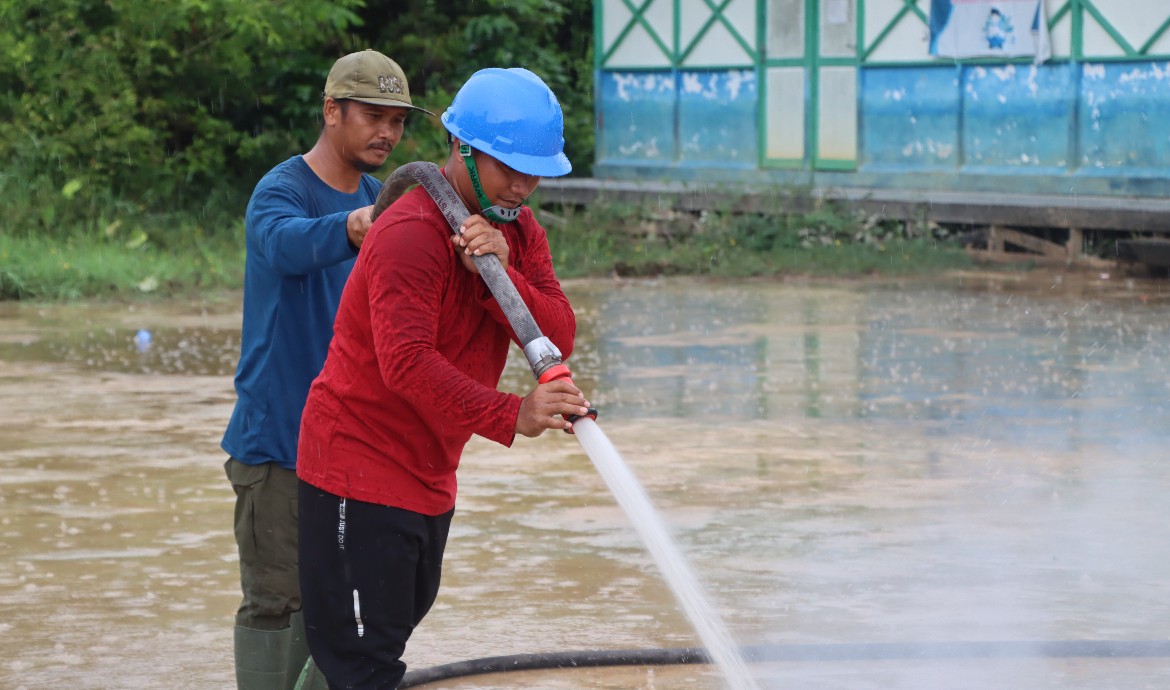
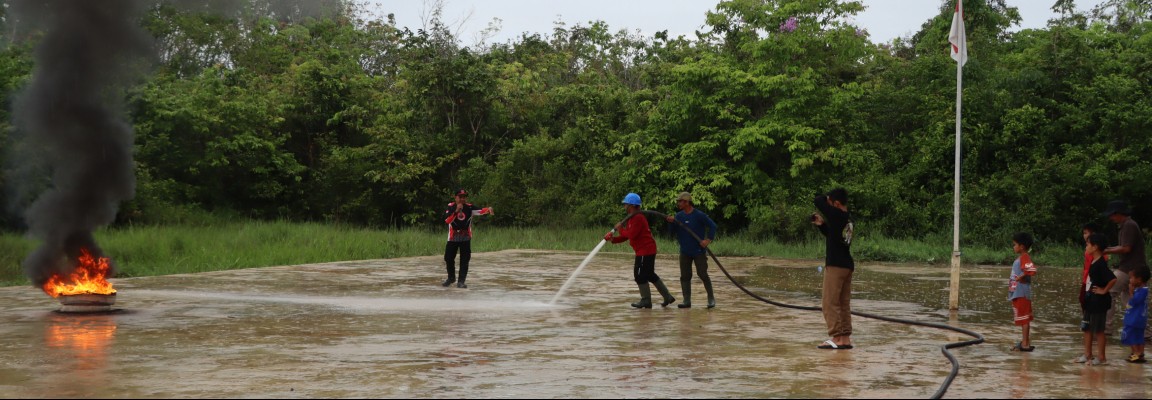
With the possibility of another strong El Niño on the horizon, BOS Foundation continues to enhance its preparedness through an integrated strategy that combines monitoring, infrastructure readiness, community capacity building, and cross-sector collaboration.
Across its conservation landscapes, BOS Foundation conducts routine ground patrols, daily satellite-based hotspot monitoring, observation from fire watch towers, and drone surveillance in high-risk areas. Monitoring relies on multiple data platforms, including NASA FIRMS, SIPONGI, and the Global Wildfire Information System (GWIS), allowing potential fires to be detected early and responded to rapidly.
The Foundation is also strengthening critical firefighting infrastructure by regularly inspecting deep wells, water reservoirs, canals, pumps, and access routes to water sources. In several locations, efforts are underway to improve accessibility so that personnel and firefighting equipment can be mobilized more efficiently during emergencies.
Community participation remains a cornerstone of BOS Foundation's fire prevention strategy. The Foundation supports training and refresher programs for community-based firefighting teams, distributes firefighting equipment to partner villages, and works closely with local governments, Regional Disaster Management Agencies (BPBD), and other stakeholders to strengthen landscape-level preparedness.
As part of these ongoing efforts, BOS Foundation is also establishing regional wildfire preparedness task forces across its sites in East and Central Kalimantan. These teams are designed to improve coordination, strengthen hotspot monitoring, streamline emergency escalation procedures, and support faster, data-driven decision-making during periods of elevated fire risk.
At the same time, the Foundation is exploring new early detection technologies through the planned installation of fire detection systems in collaboration with various partners, enabling potential fires to be identified and addressed as quickly as possible.
For orangutan conservation, the impacts of El Niño extend well beyond the immediate threat of wildfire. Prolonged drought and fires destroy food resources, degrade habitat, force orangutans into areas closer to human activity, and increase the likelihood of human-orangutan conflict.
As habitat quality declines, more orangutans require rescue and rehabilitation, placing additional pressure on conservation organizations working to ensure their long-term survival.
Preparing for increasingly severe wildfire seasons requires long-term commitment and close collaboration among governments, conservation organizations, local communities, the private sector, and international partners. Sustained investment in fire prevention, ecosystem restoration, community capacity building, and emergency preparedness is essential.
Drawing on more than three decades of experience in orangutan conservation and the hard lessons learned from the devastating fires of 2015–2016, BOS Foundation remains committed to working alongside its partners to safeguard Indonesia's forests and protect the future of wild orangutans. Because when it comes to wildfires, prevention will always be more effective than recovery.


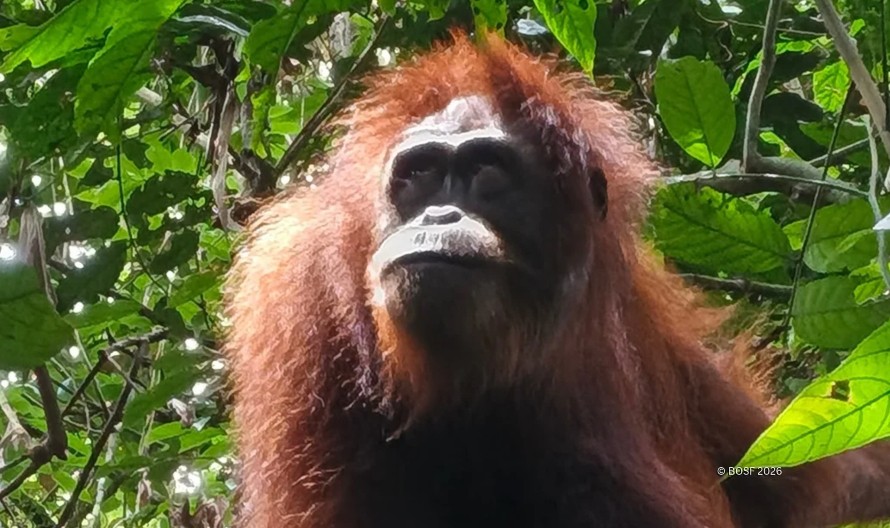
Post-release monitoring allows us to observe orangutans in the wild. Recent sightings of Meryl and Lykke in TNBBBR show both female orangutans actively foraging and displaying excellent nest-building skills.
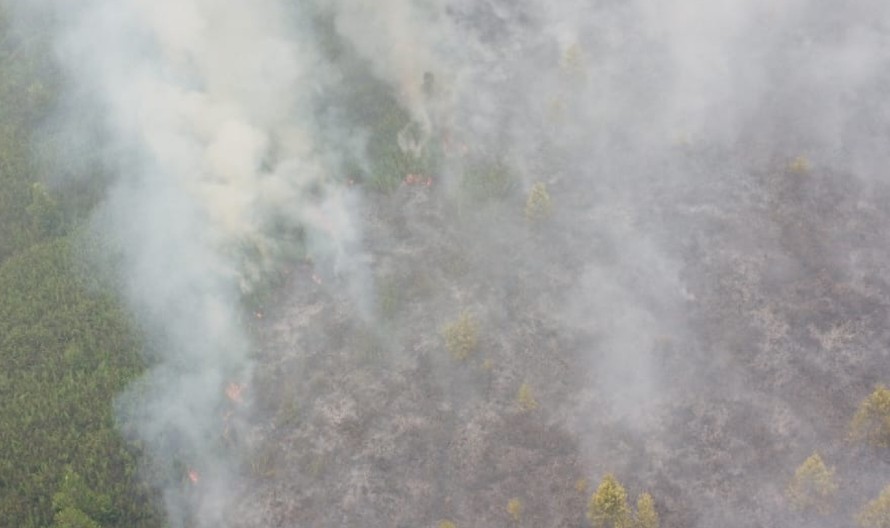
Forest fires create a hidden crisis for wildlife. Beyond destroying habitats, smoke exposure threatens orangutans' health, restricts food and water, and violates core animal welfare principles across Kalimantan's ecosystems.
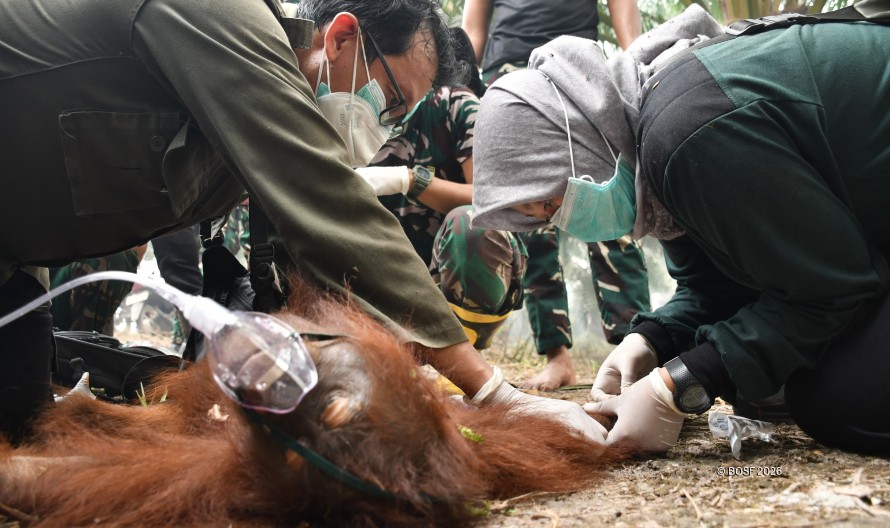
When forest fires strike, orangutans face a deadly fight for survival. Trapped atop a burning tree in Central Kalimantan, baby orangutan Novita was rescued through a joint emergency effort by BKSDA, BOS Foundation, TNI AD, and local residents.
