


ENCOUNTER WITH ORANGUTANS MERYL AND LYKKE
Post-release monitoring allows us to observe orangutans in the wild. Recent sightings of Meryl and Lykke in TNBBBR show both female orangutans actively foraging and displaying excellent nest-building skills.



In March this year, our Monitoring team stumbled upon a rare flower growing on Juq Kehje Swen Island, an 82.84-hectare forested island in East Kalimantan.
Juq Kehje Swen Island (meaning 'orangutan island' in the local Wehea Dayak language) is a manmade island that was purposely built as a pre-release site for rehabilitated orangutans. Located about 10 kilometres from the Kehje Swen Forest, Juq Kehje Swen was built through a collaborative effort between the BOS Foundation and PT. Nusaraya Agro Palm Oil (NUSA). This protected island is flanked by two rivers - the Melenyu River and Wahau River.
A wide variety of flora can be found on the Juq Kehje Swen Island. Some of these species are very unique and rare, like the cousins of the famous giant corpse flowers (Amorphophallus sp.). Due to their low numbers and scarce distribution, all species in the Amorphophallus genus are protected in Indonesia by law (PP No. 7, 1999).

Armophophallus sp. at Vegetative Stage
The corpse flowers belong to the Araceae family and rarely flower, with the famous titan arum of Sumatra only flowering once a decade. As its name suggests, it emits a rotten smell when in bloom, which attracts pollinators.
Corpse flowers are only found in places where the soil is rich in organic matter. Abiotic factors, such as temperature, humidity, light intensity, and soil pH (acidity), determine the quality of the soil and greatly affect the flower’s survival. The vegetation growing in the vicinity of a corpse flower is also an influential factor, as nearby plants provide nutrients for it to thrive in.
It is not surprising that this flower is able to grow on Juq Kehje Swen Island, as the island’s environmental conditions are ideal; temperatures sit between 28-33 degrees Celsius and the soil has a pH between 5-8. The location of the flower our Monitoring team found in March was not far from the river, which also supports its growth.
The forest floor of Juq Kehje Swen Island, littered with dead plant material, contributes to the ideal conditions required for corpse flowers to survive. Biodiversity on the island is supported by the finches and other birds that act as seed dispersal agents. When the flower is in bloom, the foul smell it emits attracts insects to help it pollinate. The ripe fruit of the plant is then eaten by the birds - and thus the cycle continues.
This year, our Monitoring team found three of these flowers, and four the year before, while undertaking observations on Juq Kehje Swen Island. To ensure that the species continues to grow on Juq Kehje Swen Island, it is important that these ecosystems are protected.
We hope to find more of these smelly flowers growing on Juq Kehje Swen Island!

Armophophallus sp. at Reproductive Stage


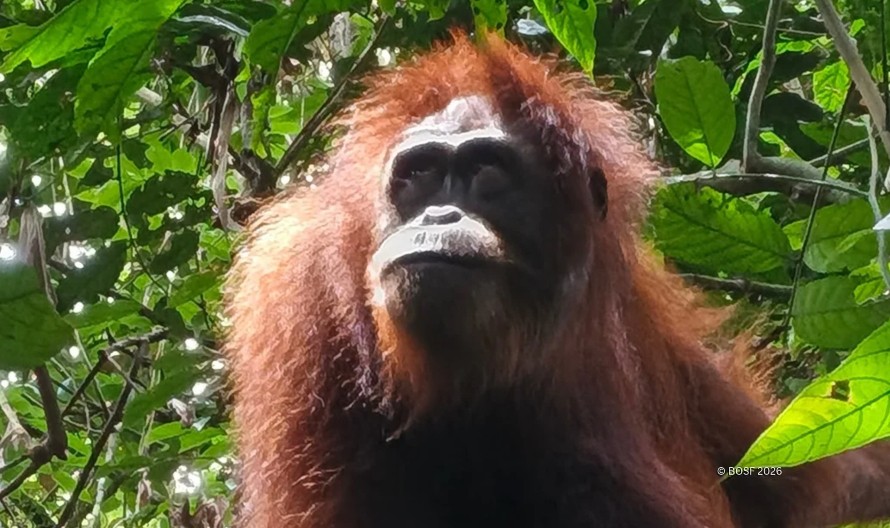
Post-release monitoring allows us to observe orangutans in the wild. Recent sightings of Meryl and Lykke in TNBBBR show both female orangutans actively foraging and displaying excellent nest-building skills.
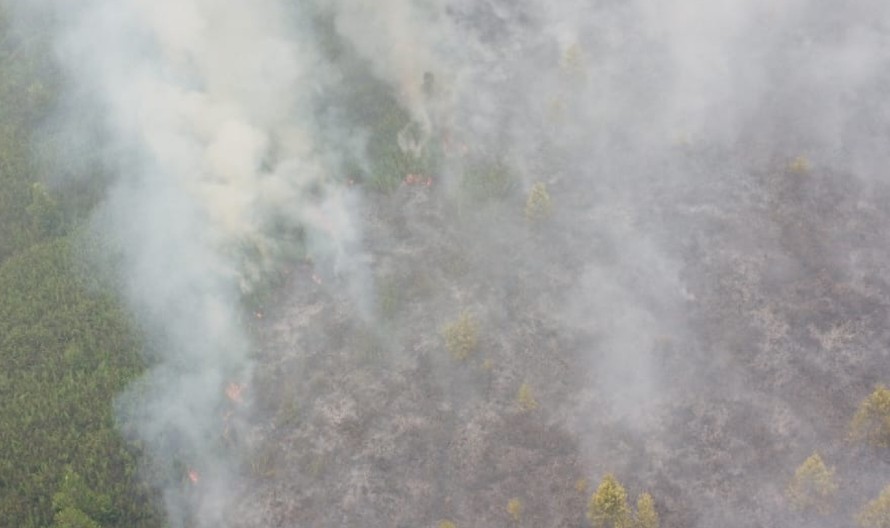
Forest fires create a hidden crisis for wildlife. Beyond destroying habitats, smoke exposure threatens orangutans' health, restricts food and water, and violates core animal welfare principles across Kalimantan's ecosystems.
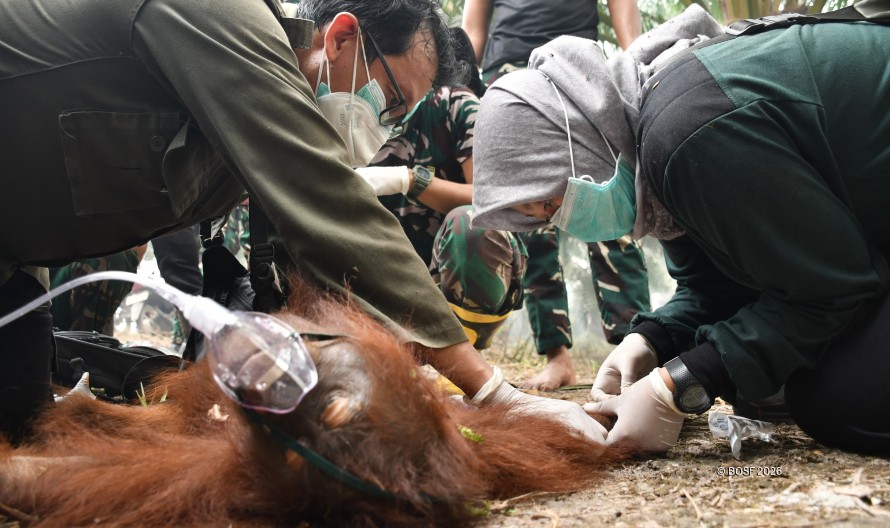
When forest fires strike, orangutans face a deadly fight for survival. Trapped atop a burning tree in Central Kalimantan, baby orangutan Novita was rescued through a joint emergency effort by BKSDA, BOS Foundation, TNI AD, and local residents.
