


ENCOUNTER WITH ORANGUTANS MERYL AND LYKKE
Post-release monitoring allows us to observe orangutans in the wild. Recent sightings of Meryl and Lykke in TNBBBR show both female orangutans actively foraging and displaying excellent nest-building skills.


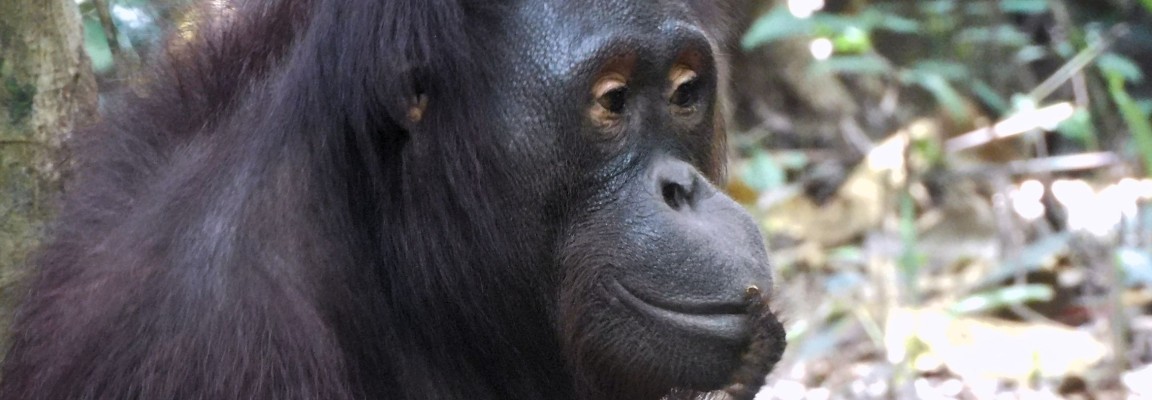
Sally, a female orangutan who previously lived in the Socialization Complex at the Samboja Lestari Orangutan Rehabilitation Centre alongside Anggoro, has now taken an important step forward in her rehabilitation journey. She has been relocated to the Juq Kehje Swen Pre-Release Island, located in Muara Wahau District, East Kalimantan. This move marks a crucial phase in preparing Sally for an independent life in the wild.
Currently, Sally is the only rehabilitated orangutan living on this pre-release island. Under the close supervision and regular monitoring of our Juq Kehje Swen Team, she continues to adapt to her natural surroundings while practicing essential survival skills such as climbing, foraging for natural food, and building nests.
Read also: RARE FLOWER SPOTTED ON JUQ KEHJE SWEN ISLAND
Living on a pre-release island allows Sally to experience conditions that closely resemble her future habitat in the wild. With minimal human intervention, she is encouraged to rely on her instincts and natural behaviours. Day by day, Sally explores the island, learns its landscape, and becomes more confident navigating her environment. Thus an important indicator of her readiness for eventual release.
Behind the seriousness of her rehabilitation process, Sally has revealed a heartwarming and unexpected side of life on the island. During daily monitoring activities, our team observed that Sally has formed a unique bond with a small, furry companion—a caterpillar. This tiny creature is the larva of a moth from the Lepidoptera class.
Read also: ISLAND #8 ABUZZ WITH ACTIVITY!
Remarkably, Sally carries this caterpillar wherever she goes, whether she is walking along the forest floor or moving between trees high above the ground. On several occasions, the monitoring team found Sally happily playing with her little friend. The caterpillar is often gently placed on Sally’s face such as around her lips, cheeks, or forehead and sometimes even on her hand.
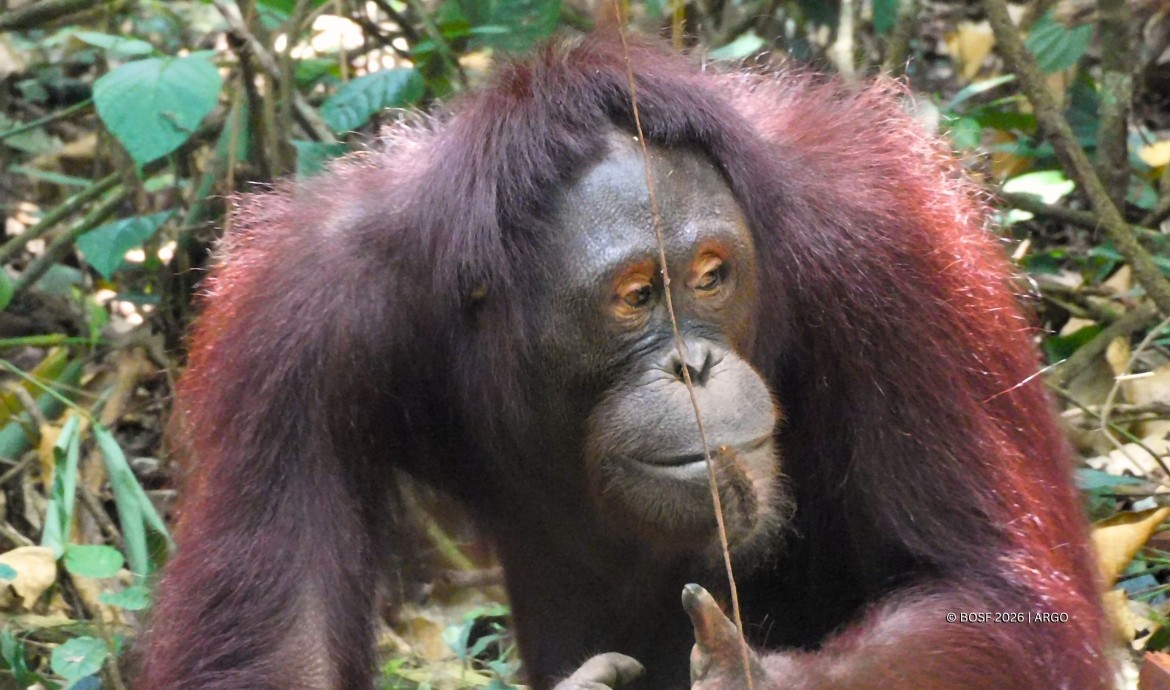

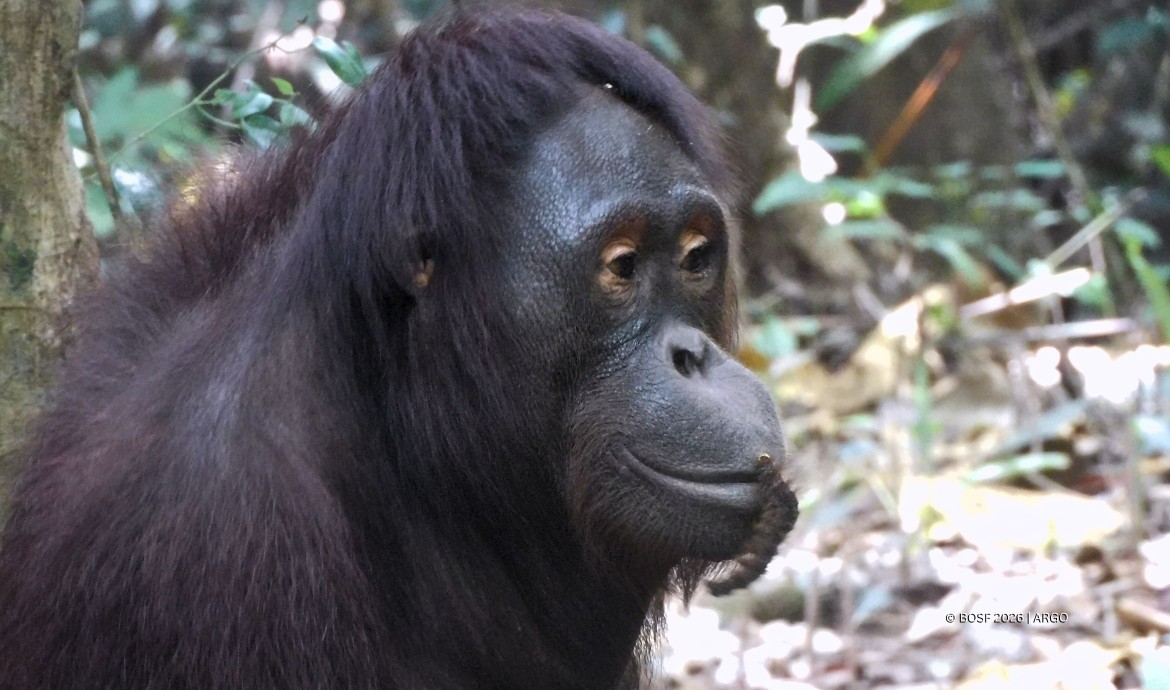
Sally appears to truly enjoy exploring the island with her tiny companion by her side. If the caterpillar accidentally falls, Sally will stop her activities to search for it before continuing her exploration. Even during mealtimes, Sally carefully places her small friend beside her while she eats, returning it to her face once she has finished.
This gentle and attentive behaviour highlights Sally’s curiosity and sensitivity toward her environment, offering a rare glimpse into the emotional and cognitive complexity of orangutans.
Interactions like this are not entirely new in BOS Foundation’s rehabilitation sites. Similar observations have been recorded in the past, such as Koko and Winey an orangutans at the Nyaru Menteng Rehabilitation Centre who were once seen spending time and sharing food with long-tailed macaques (Macaca fascicularis) at a feeding platform.
Read also: WHO NEEDS FOES WITH FRIENDS LIKE THIS!
Sally and her tiny companion’s story reminds us that a healthy, well-protected forest provides space for extraordinary and unexpected interspecies interactions. These small but meaningful moments reflect the richness of biodiversity and the delicate balance within forest ecosystems.
As humans, capable of altering ecosystems on a global scale, we carry a responsibility to protect forests and the life within them. By safeguarding natural habitats, we ensure that unique, heartwarming stories like Sally and her little friend can continue to unfold in the wild, just as nature intends.


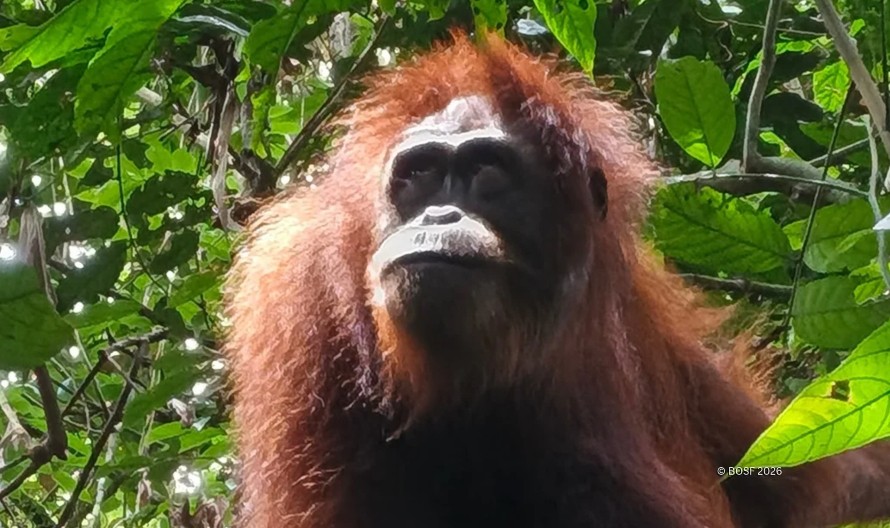
Post-release monitoring allows us to observe orangutans in the wild. Recent sightings of Meryl and Lykke in TNBBBR show both female orangutans actively foraging and displaying excellent nest-building skills.
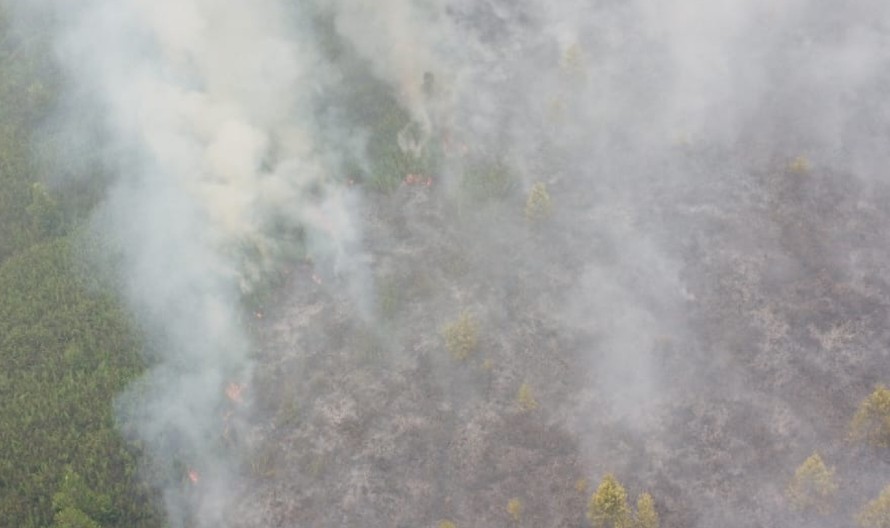
Forest fires create a hidden crisis for wildlife. Beyond destroying habitats, smoke exposure threatens orangutans' health, restricts food and water, and violates core animal welfare principles across Kalimantan's ecosystems.
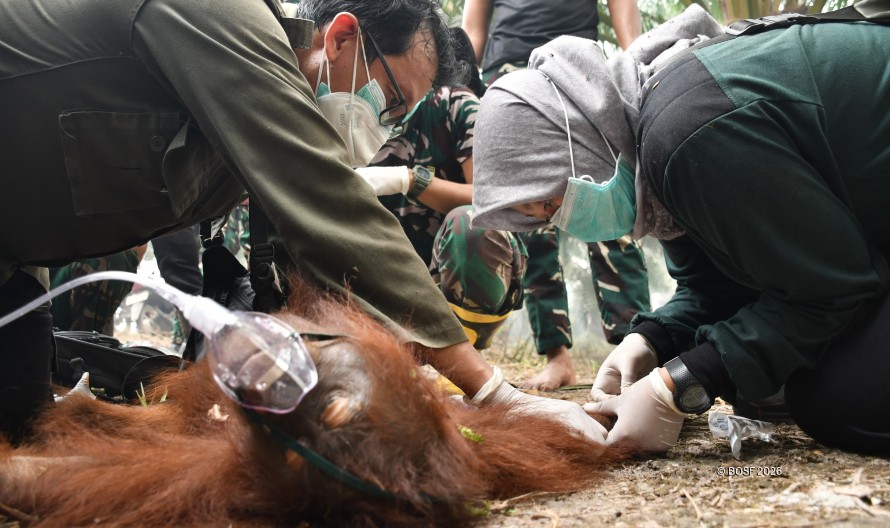
When forest fires strike, orangutans face a deadly fight for survival. Trapped atop a burning tree in Central Kalimantan, baby orangutan Novita was rescued through a joint emergency effort by BKSDA, BOS Foundation, TNI AD, and local residents.
